Burnt Mountain Forest Project

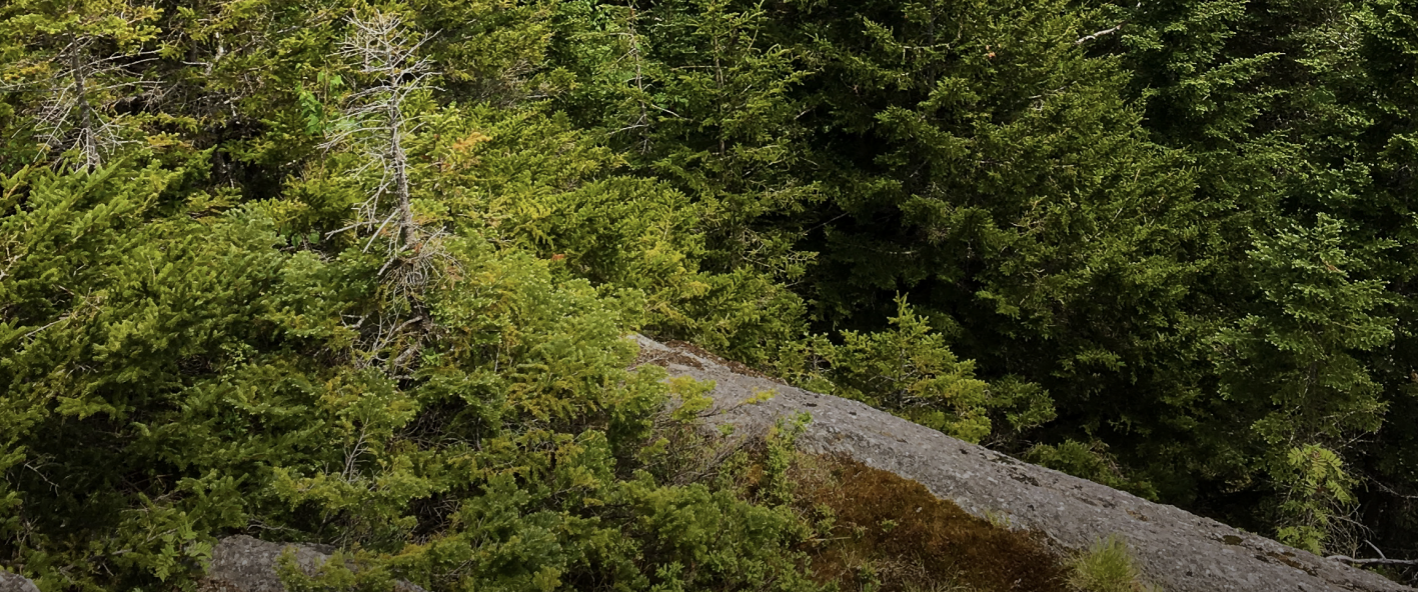
The Anew–Burnt Mountain Improved Forest Management Project encompasses 5,317 acres of northern hardwood and conifer forest in Vermont’s northern Green Mountains. Ecologically, the property is highly significant, linking critical habitats across adjacent state-owned parks and privately conserved lands to form a contiguous block of more than 11,000 acres of unfragmented forest.
Burnt Mountain was originally part of a 26,000-acre tract owned and sustainably managed by The Nature Conservancy (TNC) and the Vermont Land Trust (VLT) through the Atlas Timberlands Partnership. In 2015, rising property values and declining conservation funding prompted TNC and VLT to begin dissolving the partnership and divesting their holdings, most of which transitioned to commercial forest management. In an important exception, TNC retained the Burnt Mountain property due to its exceptional ecological value. To support its long-term stewardship, TNC enrolled the property in a carbon project designed to generate revenue for ongoing conservation and ecological restoration.
Restoration efforts have included decommissioning an extensive network of legacy logging roads and improving in-stream habitat on Calavale Brook, which had been degraded by prior land-use practices. At the same time, TNC placed a “Forever Wild” conservation easement on the property, ensuring that it will remain permanently protected and continue to serve as a keystone component of the region’s larger forest landscape.
Before TNC and VLT acquired the tract, the Burnt Mountain forest was managed for commercial timber production, reflecting common practices in the surrounding region, including the nearby Northeast Kingdom, an area known for intensive, large-scale forestry. Repeated heavy harvesting resulted in a significant underrepresentation of older forest stands and an imbalanced age structure. Today, carbon revenue enables TNC to maintain Burnt Mountain as a forever-wild forest, allowing natural ecological process
Baseline Description
Conventional private forestland managers in this region pursue more aggressive timber management regimes than would typically be utilized by TNC. The baseline scenario is modeled to account for this and represents an economically advantageous harvest regime likely to be undertaken by a non-governmental organization, subject to operational and legal considerations in the region, including Vermont Heavy Cut Law: Title 10, Chapter 83, 2625 and Vermont best management practices (BMPs), dictating the size and management constraints around waterbodies. As a result of the carbon project, the Burnt Mountain forest is sequestering carbon beyond common practice by eliminating commercial harvesting and

he Anew–Burnt Mountain Improved Forest Management Project encompasses 5,317 acres of northern hardwood and conifer forest in Vermont’s northern Green Mountains. Ecologically, the property is highly significant, linking critical habitats across adjacent state-owned parks and privately conserved lands to form a contiguous block of more than 11,000 acres of unfragmented forest.
Burnt Mountain was originally part of a 26,000-acre tract owned and sustainably managed by The Nature Conservancy (TNC) and the Vermont Land Trust (VLT) through the Atlas Timberlands Partnership. In 2015, rising property values and declining conservation funding prompted TNC and VLT to begin dissolving the partnership and divesting their holdings, most of which transitioned to commercial forest management. In an important exception, TNC retained the Burnt Mountain property due to its exceptional ecological value. To support its long-term stewardship, TNC enrolled the property in a carbon project designed to generate revenue for ongoing conservation and ecological restoration.
Restoration efforts have included decommissioning an extensive network of legacy logging roads and improving in-stream habitat on Calavale Brook, which had been degraded by prior land-use practices. At the same time, TNC placed a “Forever Wild” conservation easement on the property, ensuring that it will remain permanently protected and continue to serve as a keystone component of the region’s larger forest landscape.
Before TNC and VLT acquired the tract, the Burnt Mountain forest was managed for commercial timber production, reflecting common practices in the surrounding region, including the nearby Northeast Kingdom, an area known for intensive, large-scale forestry. Repeated heavy harvesting resulted in a significant underrepresentation of older forest stands and an imbalanced age structure. Today, carbon revenue enables TNC to maintain Burnt Mountain as a forever-wild forest, allowing natural ecological process
Impact in numbers