Klawock Heenya Forestry Project
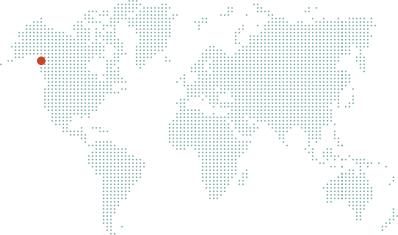
Ending commercial harvesting on more than 9,000 acres of Tlingit-owned temperate rainforest on Prince of Wales Island, Alaska.
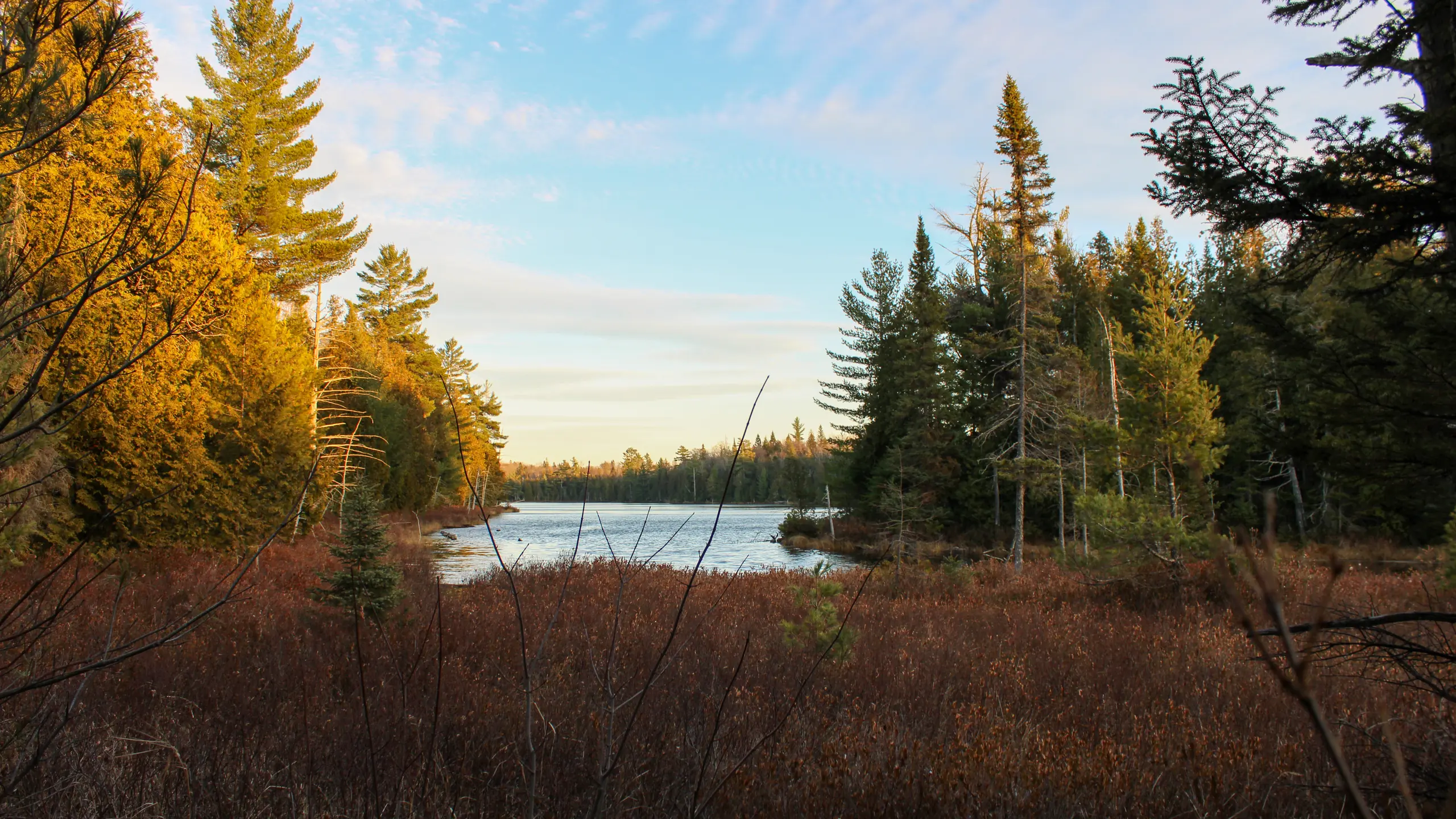
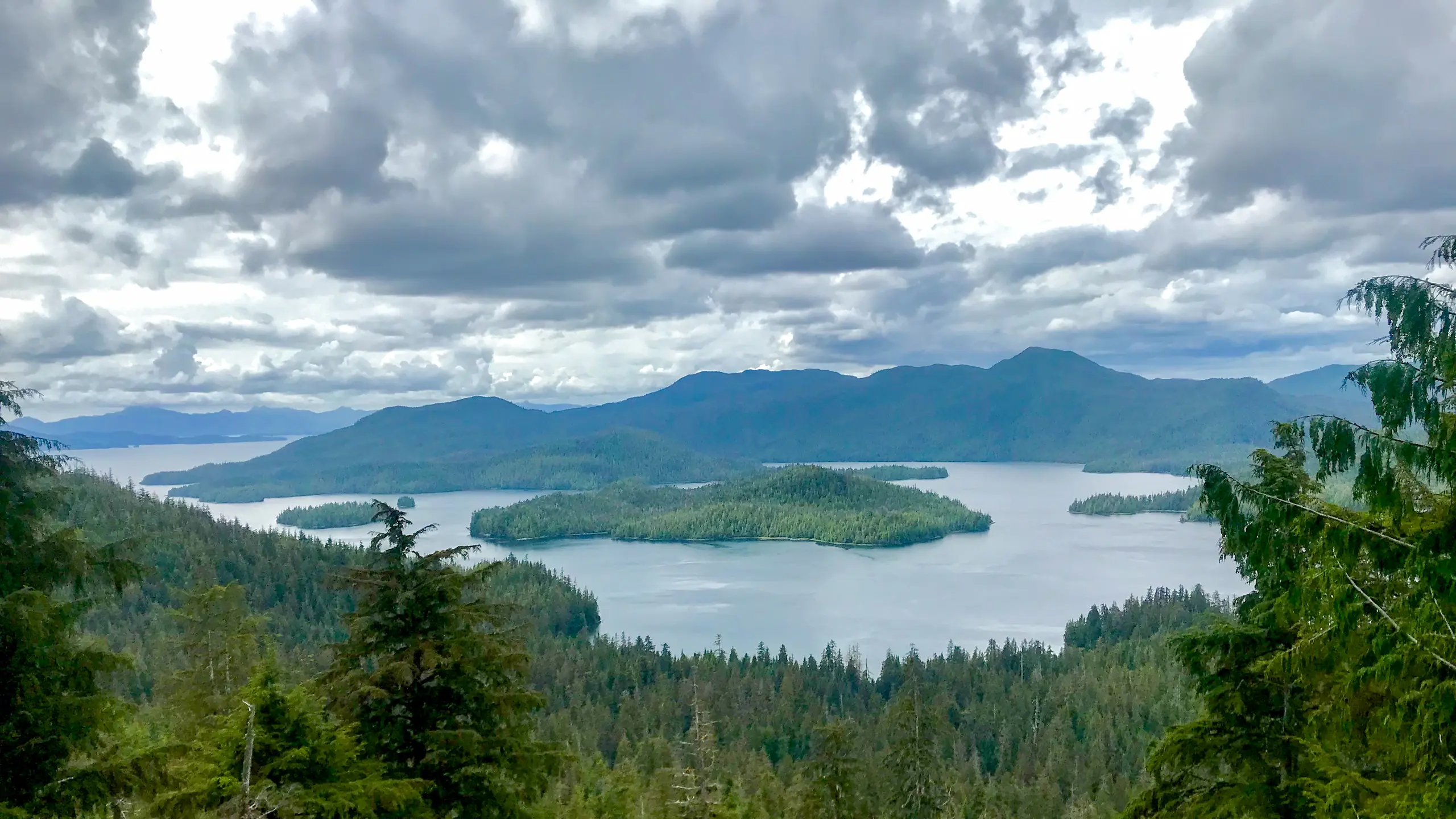
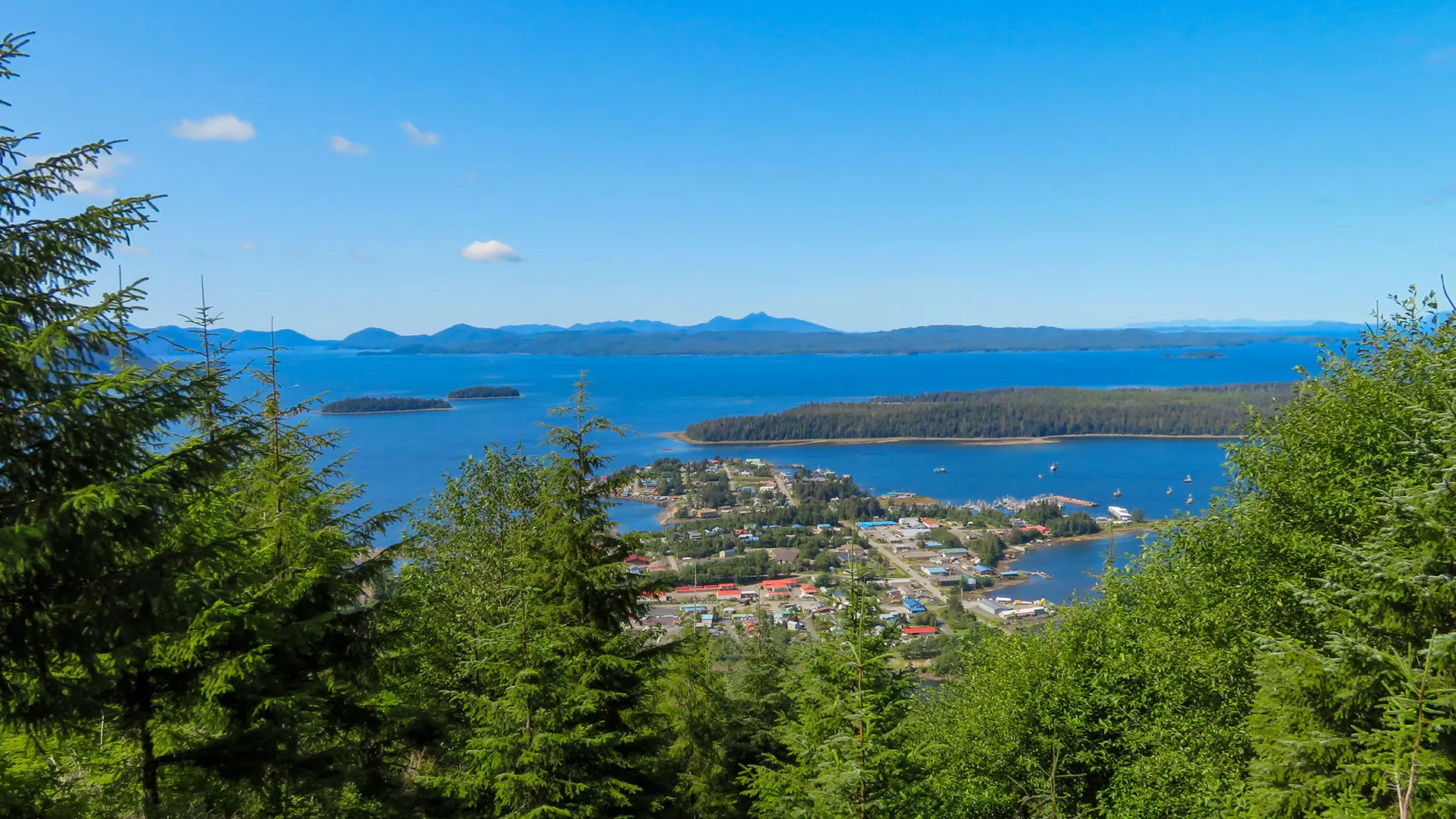
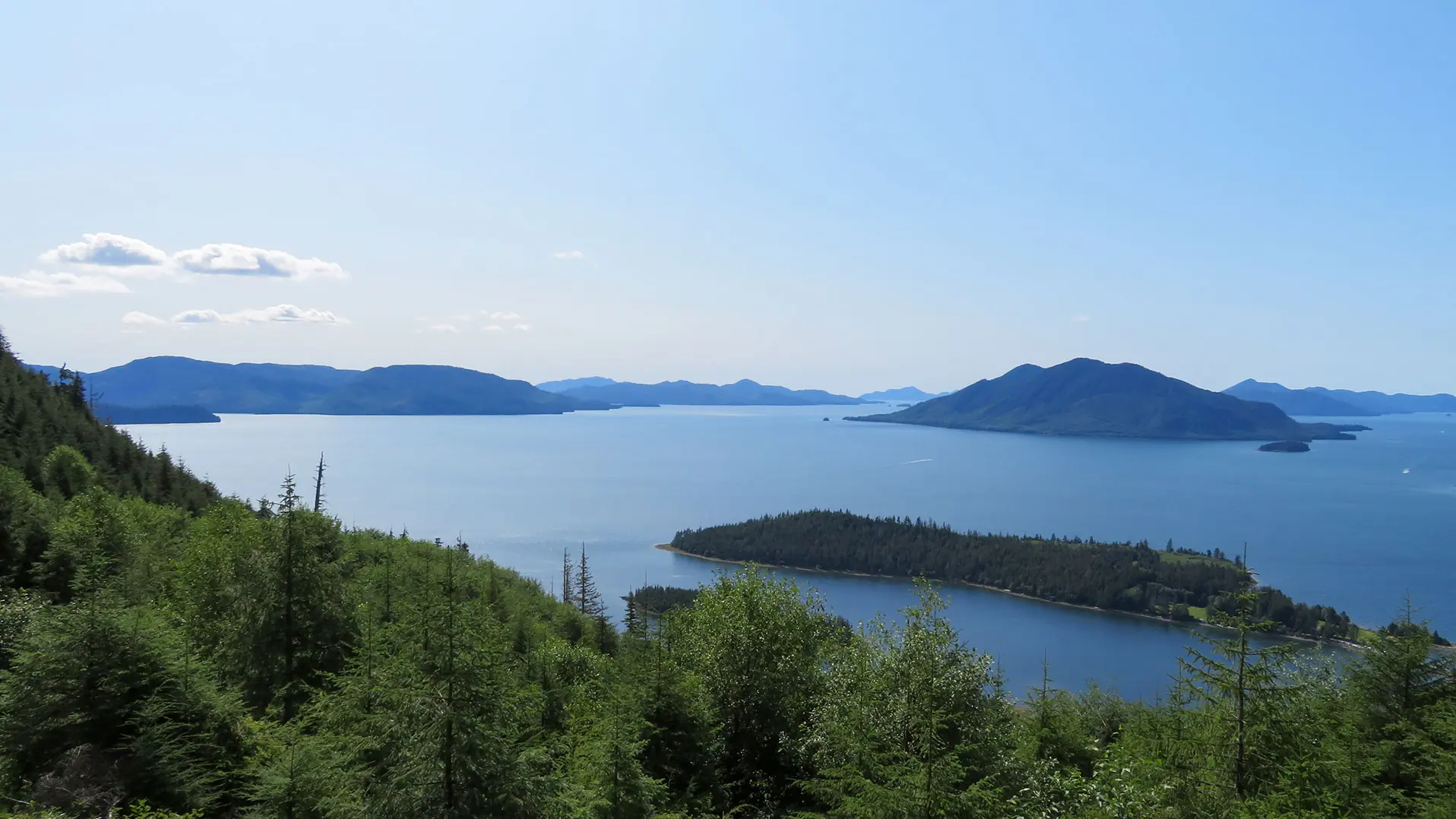
The Klawock Heenya Forestry Project is an Improved Forest Management (IFM) project on more than 9,000 acres of mixed conifer, western hemlock, Sitka spruce and western redcedar-hemlock forest on Prince of Wales Island, Alaska, part of the world’s largest intact temperate rainforest. The land is owned by the Klawock Heenya Corporation (KHC), a Native corporation of Alaska Native Tlingit People, which harvested timber on the property from 1984 through 2005.
As a result of the carbon project, no ongoing or future commercial harvesting is intended, and carbon revenue supports KHC’s restoration efforts. Registered with the American Carbon Registry, the project is expected to deliver more than 659,000 tonnes of CO₂ emissions reductions over its first 20 years. Its more than 8,600 acres of coniferous forest provide significant habitat for the Sitka black-tailed deer, an important resource for native tribes.
Additionality
The Klawock-Heenya Project is located on Prince of Wales Island in Klawock, Alaska and is part of the world’s largest intact temperate rainforest. The project area includes over 9,000 acres of Mixed Conifer, Western Hemlock, Sitka Spruce, and Western Redcedar-Hemlock forests rich in biodiversity and cultural significance. It is now owned by the Klawock Heenya Corporation (KHC), a Native corporation of Alaska Native Tlingit People. Under the Alaska Native Claims Settlement Act of 1971 (ANCSA), these lands were conveyed to the Native corporation, which is not obligated to adhere to any regional forestry laws. KHC members harvest food from rivers across the property, hunt deer, pick berries, and live off the land. The property is directly linked to one of the largest downstream watersheds in the area, making its sustainable management regionally significant.
During the 1960s and 1970s, the land now enrolled in this carbon project was under Tongass National Forest ownership where the common harvesting and silvicultural practices included clearcuts to encourage deer browse and regeneration of spruce and hemlock. In total, more than 1 million acres of the Tongass National Forest have been clearcut since the 1950s, including lands represented in the Klawock-Heenya Project. In 1980, significant sections of high-volume timber stands of the Tongass National Forests were withdrawn and transferred to Native settlements, including lands that were transferred to KHC. After 1980, Native Corporations began harvest operations on this newly acquired land, and a timber boom coincided with the construction of a pulp mill in the region. Native corporations maximized sawtimber and pulpwood production and exported timber out of the country. KHC was no different, and in 1984, KHC began harvesting to serve the round log export market, clearcutting using helicopter and cable logging. Canadian mill demand for pulpwood from Southeast Alaska then drove up pulp prices, which increased pressure for aggressive management and short rotations.
KHC continued harvesting operations through 2005. However, historical logging activities and global warming began to significantly change the complexion of the Klawock River—a key resource to shareholders’ livelihoods and outdoor tourism revenue. Noticing these impacts from the significant harvesting of the previous 25 years, KHC began focusing on restoration and cleanup. Forest carbon credit revenues play a critical role in supporting KHC’s restoration efforts as funding for ecosystem restoration and protection projects was extremely limited previously. Carbon revenue eases financial pressures to harvest more aggressively for timber and incentivizes the maintenance of forest stocking for decades.
As a result of this forest carbon project, no ongoing or future commercial harvesting is intended. As KHC’s CEO Mary Edenshaw describes, the focus is now on managing the land to protect ecological and recreational resources: “We live in an extremely beautiful place, and we need to preserve it for our future generations. Going into the carbon program gave us an opportunity to move in that direction.”
Baseline Description
The baseline represents a commercial harvest regime that was in practice over the property’s history, including KHC ownership, and targeted toward maximizing timber revenue. Baseline practices involve pre-commercial thinning on overstocked, second growth stands and harvesting merchantable timber throughout old-growth forests. Final harvests occur when stands reach a 12,000 BF/acre threshold following an intermediate round of pre-commercial thinning when they are about 15 years old. These are typical practices in the project region on Alaska Native Corporation (ANC) Lands.
Management of private forestland in the region is characterized by large-scale clearcuts at short intervals. Most village corporations harvest all their merchantable timber within 10 years of initiating harvests, which is approximately one-eighth the time needed to produce marketable volumes of timber on second growth stands in southeast Alaska. Harvesting is costly, so to create efficiencies, corporations often choose to log high volumes. There are no easements or restrictive covenants on the property prohibiting the KHC from managing in line with the baseline, and because they are private lands without state or federal encumbrance, KHC could resume its aggressive harvesting from 1980-2005 at any time.
Regional Harvest Activities
A conservative baseline scenario considers not only what a landowner could do, but what a landowner plausibly would do in the absence of the harvest limitations associated with a carbon project. In the below map, Anew demonstrates actual recent harvests in the project area’s region. This data speaks to the strength of local timber markets and common management practices on forested properties of comparable size and ownership type—an integral piece in informing the accuracy and viability of assumptions in the baseline scenario.
Harvest Comparison
All harvests/forest losses larger than 5 acres that happened between 2001 and 2022 within a 60 mile radius from the project area are depicted in orange, showing the very real pressures on forests in the area. The carbon project ensures sustainable management on the project area for 40 years, twice as long as the period depicted below.
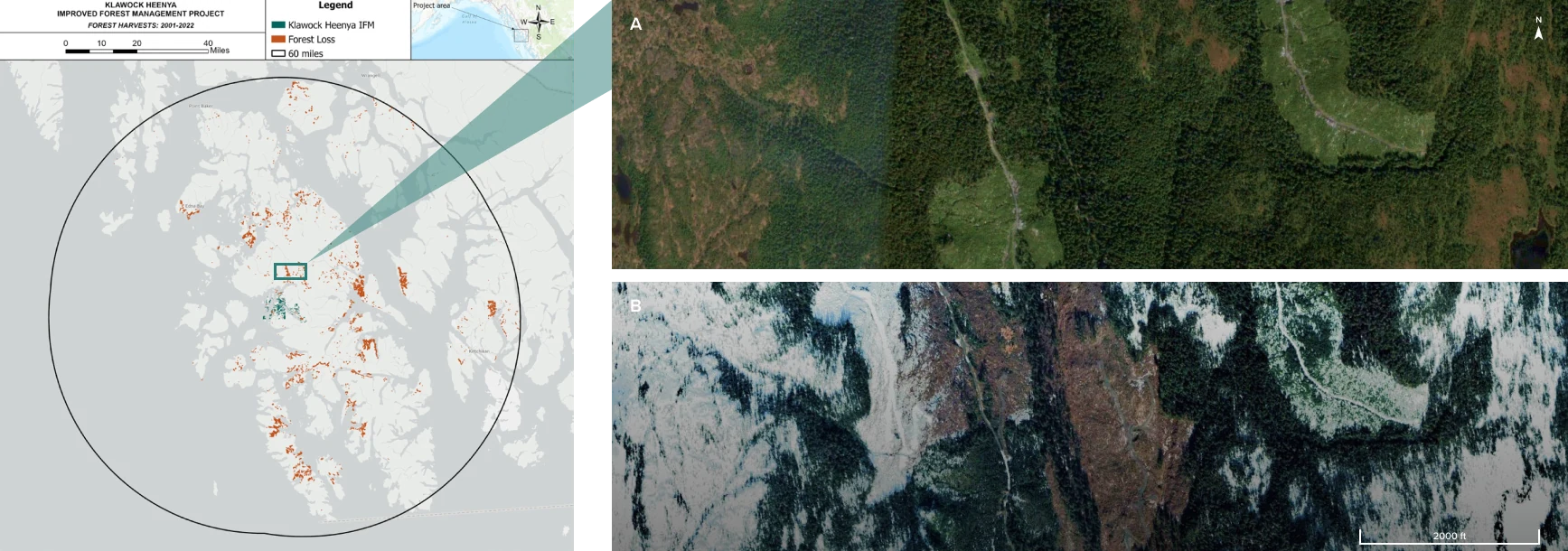
Hansen, M. C et al. “High-Resolution Global Maps of 21st-Century Forest Cover Change.” Science 342 (15 November 2013 & updates): 850–53. https://glad.earthengine.app/view/global-forest-change
Regional Mill Map
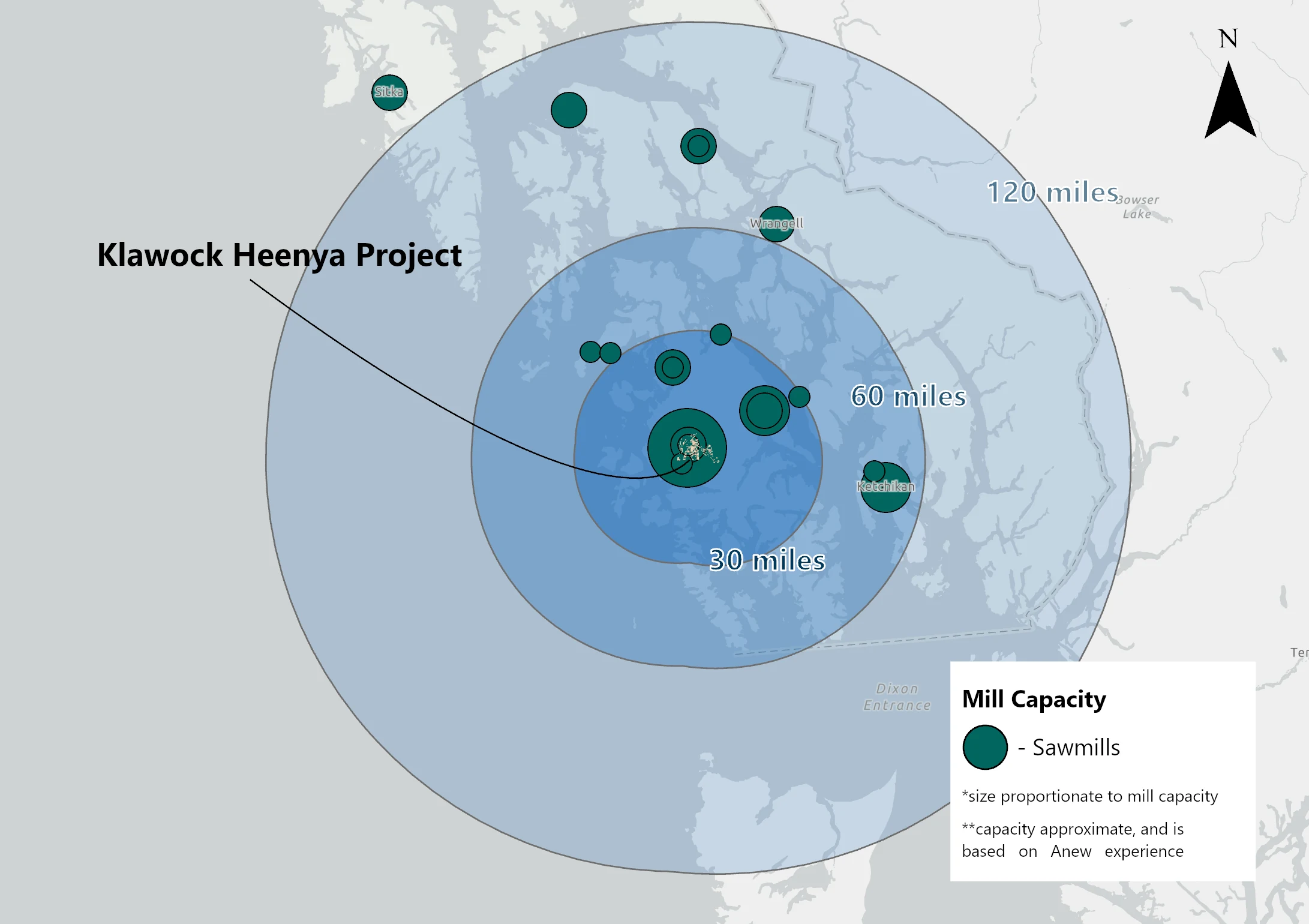
A strong understanding of local forest products infrastructure is key to building a realistic and conservative baseline scenario. To carry out harvests modeled in the baseline, a forest property must be within a feasible travel distance to active processing facilities. This map presents mills that are drivable from the project area along with their relative processing capacity, delineating a framework for a current or future landowner to move timber in the absence of the carbon project, thereby providing a critical piece of direct evidence to the credibility and additionality of the carbon credits resulting from the project’s activities.
Ecological Highlight
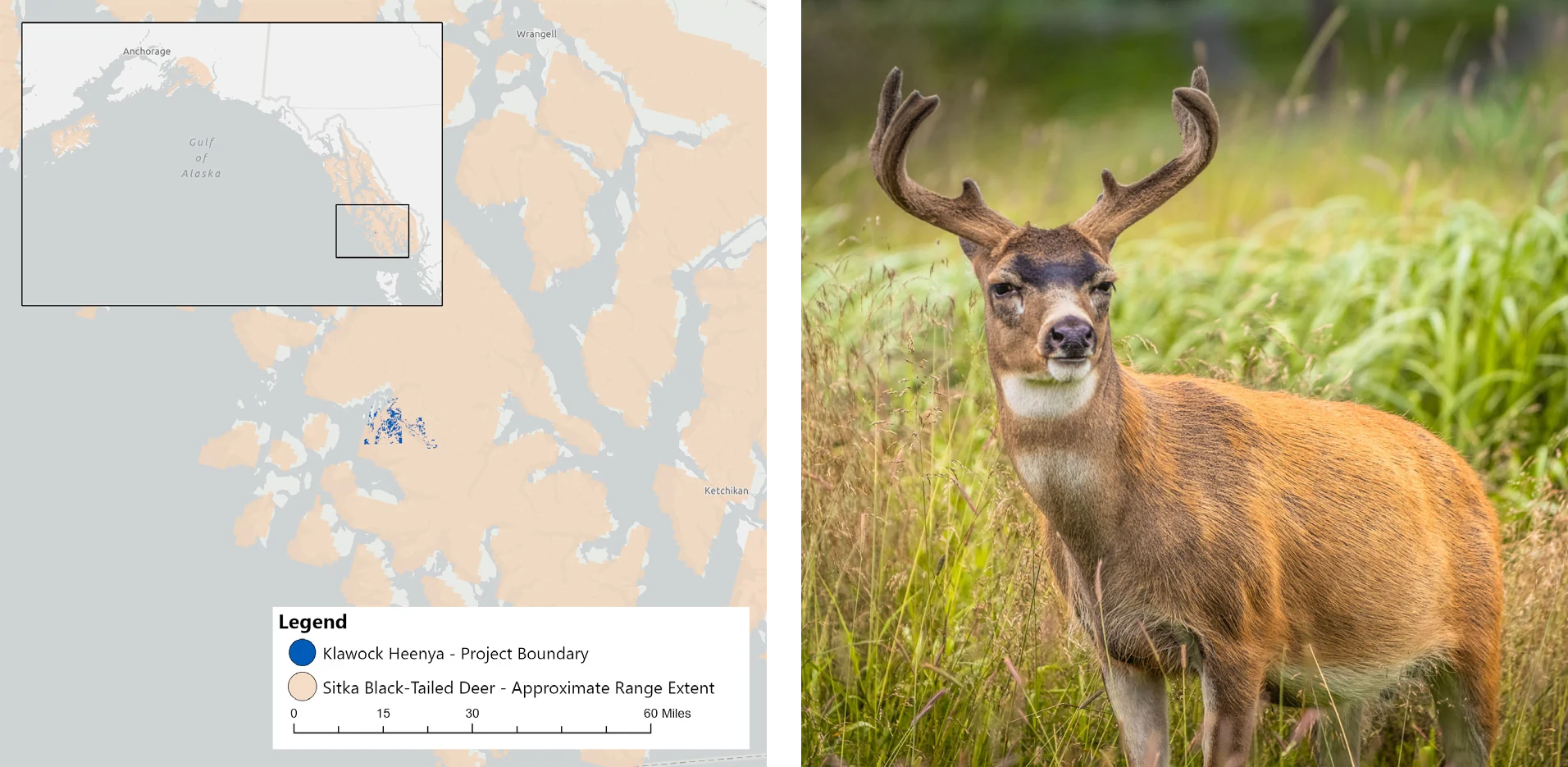
The Klawock Heenya project contains more than 8,600 acres of coniferous forest in southeast Alaska providing significant habitat for the Sitka black-tailed deer (Odocoileus hemionus sitkensis), a species that is an important resource for native tribes as well as an aesthetic symbol of the region. The deer rely on old-growth forests, especially in winter, as old growth forests have lower snow accumulation providing improved forage availability and cover from predators. Recent Alaskan management strategies centered around shortened rotation ages and clearcuts limit deer forage during mid-rotation phases due to lack of ecological resource and deer usage in winter due to heavy snow accumulation making mobility difficult. Because the carbon project has decreased the pressure for KHC to harvest, KHC can focus its management strategies on increasing habitat for Sitka black-tailed deer and other local flora and fauna rather than on maximizing timber revenue.
Project Impacts
Sustainable Development Goals in action
A universal blueprint for a better world—Anew is helping deliver on the United Nations global vision for social, economic, and environmental sustainability.
Clean Water and Sanitation
A watershed council is active in the property’s management and restoration planning, which outlines an approach for monitoring water-related resources and infrastructure and improving water quality and fish habitat on the property. The property has significant freshwater resources including a rich network of streams that support resident populations and/or anadromous runs of Pink, Chum, Coho, and Sockeye salmon, Dolly Varden char, Steelhead, and Cutthroat trout. In addition, estuarine, riparian, and wetland habitats are used by various shorebirds, waterfowl, and other birds. Carbon revenues will be used for stream restoration, focusing on the Klawock River, as the impacts of timber harvests and global warming on the riverbanks have been staggering.

Decent Work and Economic Growth
For centuries, the forests on this property have been used for subsistence uses such as firewood, housing materials, canoe logs, basket materials, clothing, and habitat for edible plants and wild game. The historical and cultural values of the land are immense. In addition, forest management activities provide local employment.

Sustainable Cities and Communities
Project lands are accessed by shareholders and others, where permitted, for various outdoor recreation pursuits including hiking, kayaking, photography, hunting, fishing, and gathering. Klawock Heenya Corporation values maintaining community access to these activities and services. There are multiple cultural areas on the property with significant meaning to the heritage of local indigenous populations including a totem park, burial grounds, historic village site, and multiple subsistence areas. This forest carbon project supports the preservation of these resources.
Climate Action
The project proponent is committed to sustainable forest management practices for continued carbon sequestration and long-term protection of stored carbon. Management decisions of the forest promote climate change resilience by focusing on natural forest growth and non-commercial maintenance harvests for forest health.
Life Below Water
Klawock Heenya lands include the marine shoreline along San Alberto Bay and Klawock Inlet and are adjacent to marine ecosystems with threatened and endangered species such as the Short-tailed Albatross, Humpback Whale, Steller Sea Lion, and Steller’s Eider. Various marine fish and shellfish also occur in the waters adjacent to the ownership. Maintaining coastal and stream riparian forest cover helps support healthy marine ecosystems while reducing the risks of human disturbance on species viability. The restoration activities in the Klawock River funded by carbon credit revenues also contribute to healthy marine ecosystems, as the river flows into nearby marine habitat.
Life on Land
One of Klawock Heenya’s long-term management objectives is to protect and enhance biological resources on the property, including the forests, fish, and other wildlife that inhabit these lands. These forests are rich in biodiversity, and reduced harvesting will improve the health of numerous land-based species including Black bear and Sitka black-tail deer.
How does IFM generate both removals and conservation credits?
Conservation Credits
Conservation credits account for climate benefit coming from the protection of the project area. Emissions that would have been released if the land was instead harvested in the absence of the project are quantified. Many of the co-benefits associated with forestry projects are inherently linked to the preservation of existing forest stands.
Removal Credits
As the newly protected trees grow, carbon is pulled from the atmosphere and sequestered in the trees’ wood material through the most proven direct air capture technology on the planet, photosynthesis.