McCoy Forestry Project
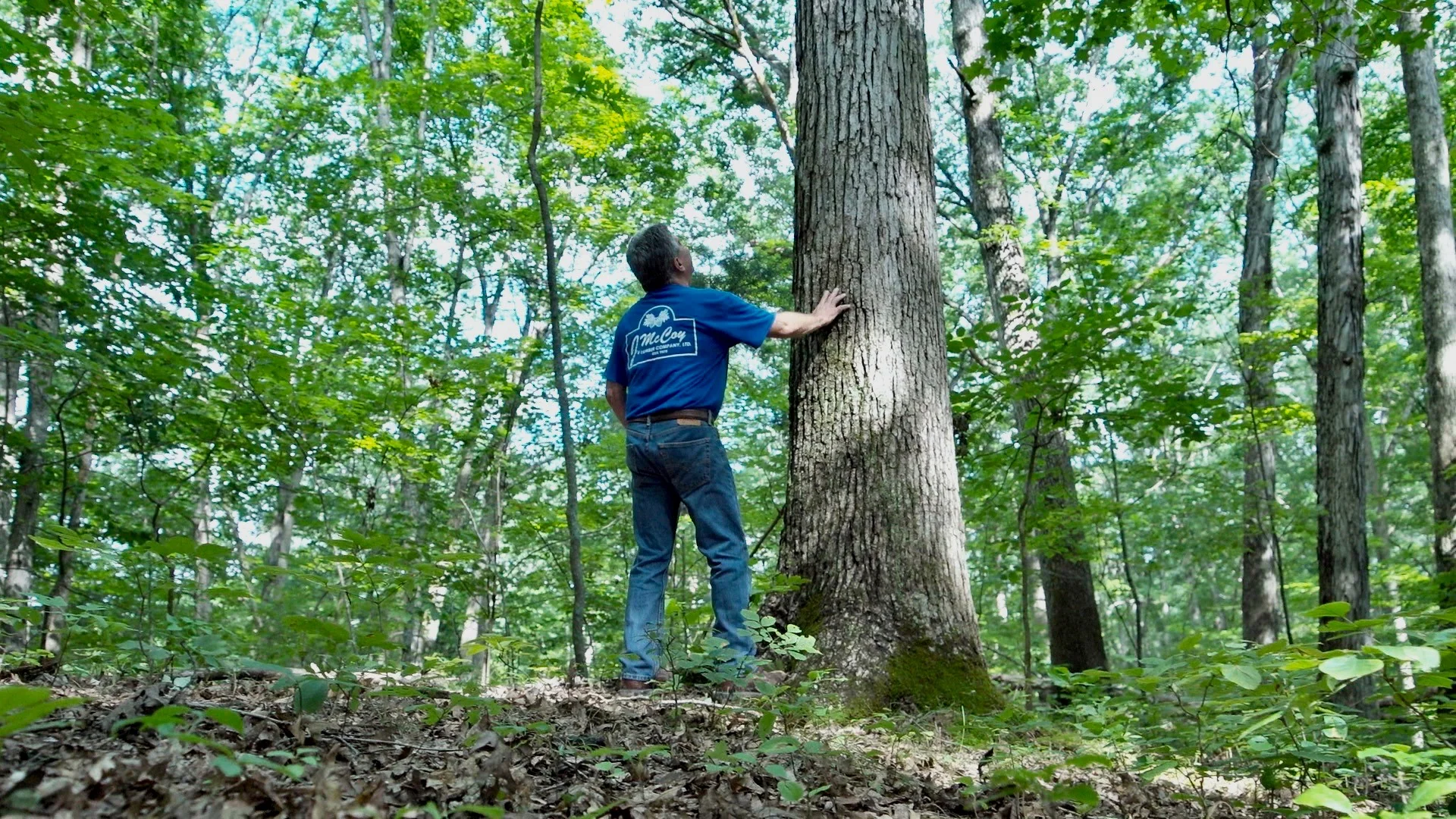
Managing 8,275 acres of family-owned oak and hardwood timberland in southern Ohio for long-term forest health instead of maximum harvest.
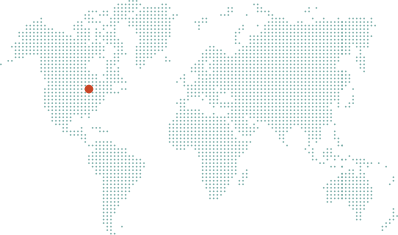
The McCoy Forestry Project is an Improved Forest Management (IFM) project on approximately 8,275 acres of oak and northern hardwood timberland across five counties in southern Ohio. The land is owned and operated by the J. McCoy Lumber Co., founded in 1978, and before the carbon project it was managed with a primary focus on revenue from wood products.
Carbon revenue lessens the pressure to remove the most merchantable timber, so McCoy’s crews now prioritize removing low-value trees to improve forest resilience, and the properties are now certified to the Sustainable Forestry Initiative standard. Registered with the American Carbon Registry, the project is expected to deliver more than 536,000 tonnes of CO₂ emissions reductions over its first 20 years. Reduced harvests and buffers around rock outcrops help protect the green salamander, an Ohio state-listed endangered species.
Additionality
The Anew-McCoy Forestry Project is located on approximately 8,275 acres of timberland across five counties in southern Ohio. The project is dominated by oak and northern hardwood species such as chestnut oak, yellow poplar, and red maple. The land enrolled in this project is owned and operated by the J. McCoy Lumber Co., which was founded in 1978. The McCoy family accumulated these properties gradually, with the goal of harvesting timber for their lumber company.
Though management of these forests has always had a foothold in sustainability, prior to the carbon project’s inception, there was a primary focus on revenue generation through wood product production. The carbon project ensures a greater focus on forest health and long-term sustainability of the forest resource. As an example, McCoy did not have a third-party, sustainable forest certification across its properties, but in association with the requirements of the ACR carbon program, underwent certification through the Sustainable Forestry Initiative (SFI) Forest Management Standard. This certification, along with the long-term permanence of the carbon project, ensures that McCoy forestlands will see continual sustainable management with no risk of overly aggressive commercial harvesting, as it may have otherwise been subject to.
While the company still harvests forest products at its own vertically integrated wood products facilities, as well as for facilities throughout the region, the carbon project has led to distinct changes in McCoy’s forestry practices. Specifically, McCoy’s foresters and harvesting crews now prioritize the removal and utilization of low-value trees, such as those which are dying, dead, or previously looked-over, in the interest of increasing overall robustness and resilience of the forest. This practice is a shift from previous management and only possible with the revenue provided by the carbon project, which lessens the pressure on McCoy to prioritize the removal of more merchantable material. The project also provides a financial opportunity for McCoy to expand its already robust management acumen by increasing its geographic reach and taking additional steps to improve the land already owned. McCoy leadership describes the impact of the carbon project:
We plan to reinvest our carbon project revenue back into the forest, whether it’s by adding to our timberland base by acquiring more land to establish additional conservation easements and sustainability measures, or by using the revenue to be better stewards of the land under our current ownership. The additional revenue makes it financially feasible to make the best long-term decisions in forestry management that oftentimes don’t create short-term financial gains.
Baseline Description
The baseline scenario follows typical regional practice in southern Ohio, where there is significant demand and capacity within local infrastructure. This area is under increasing demand for lumber products, as detailed by McCoy:
“In recent years, the land in our area has seen increased stress and pressure. Over harvested timber is abundant.”
Because private forestland in the region is often heavily harvested and managed as a profit-maximizing asset, the baseline scenario models management practices which would have been highly attractive financially and consistent with common practices in the region. It includes silvicultural practices such as clear cutting, shelterwood, and selection harvests at intensity levels that are more financially motivated. There were financial pressures and a high probability that McCoy would implement these practices prior to its entrance into the carbon project as the forests are well-stocked and free of encumbrances. In fact, McCoy could readily harvest more aggressively than projected in the baseline if they chose to fully maximize returns from timber management.
Regional Harvest Activities
A conservative baseline scenario considers not only what a landowner could do, but what a landowner plausibly would do in the absence of the harvest limitations associated with a carbon project. In the following map, Anew demonstrates actual recent harvests in the project area’s region. This data speaks to the strength of local timber markets and common management practices on forested properties of comparable size and ownership type—an integral piece in informing the accuracy and viability of assumptions in the baseline scenario.
Harvest Comparison
All harvests/forest losses larger than 5 acres that happened between 2001 and 2022 within a 60 mile radius from the project area are depicted in orange, showing the very real pressures on forests in the area. The carbon project ensures sustainable management on the project area for 40 years, twice as long as the period depicted below.
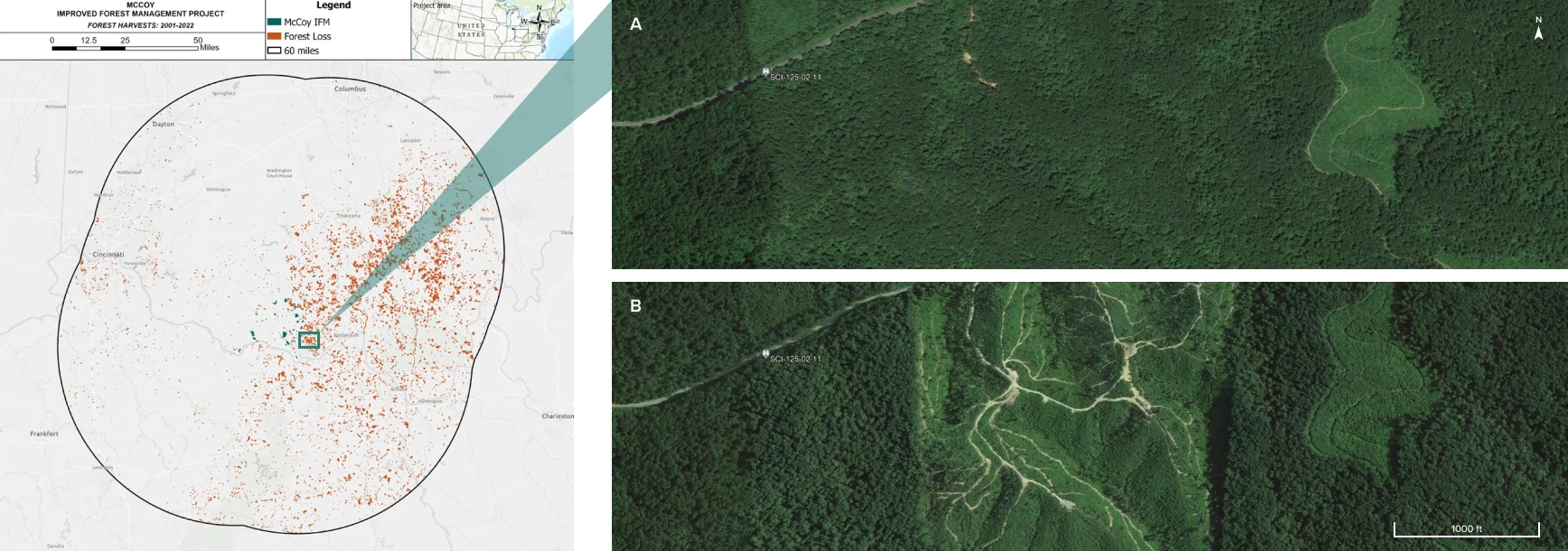
Hansen, M. C et al. “High-Resolution Global Maps of 21st-Century Forest Cover Change.” Science 342 (15 November 2013 & updates): 850–53. https://glad.earthengine.app/view/global-forest-change
Regional Mill Map
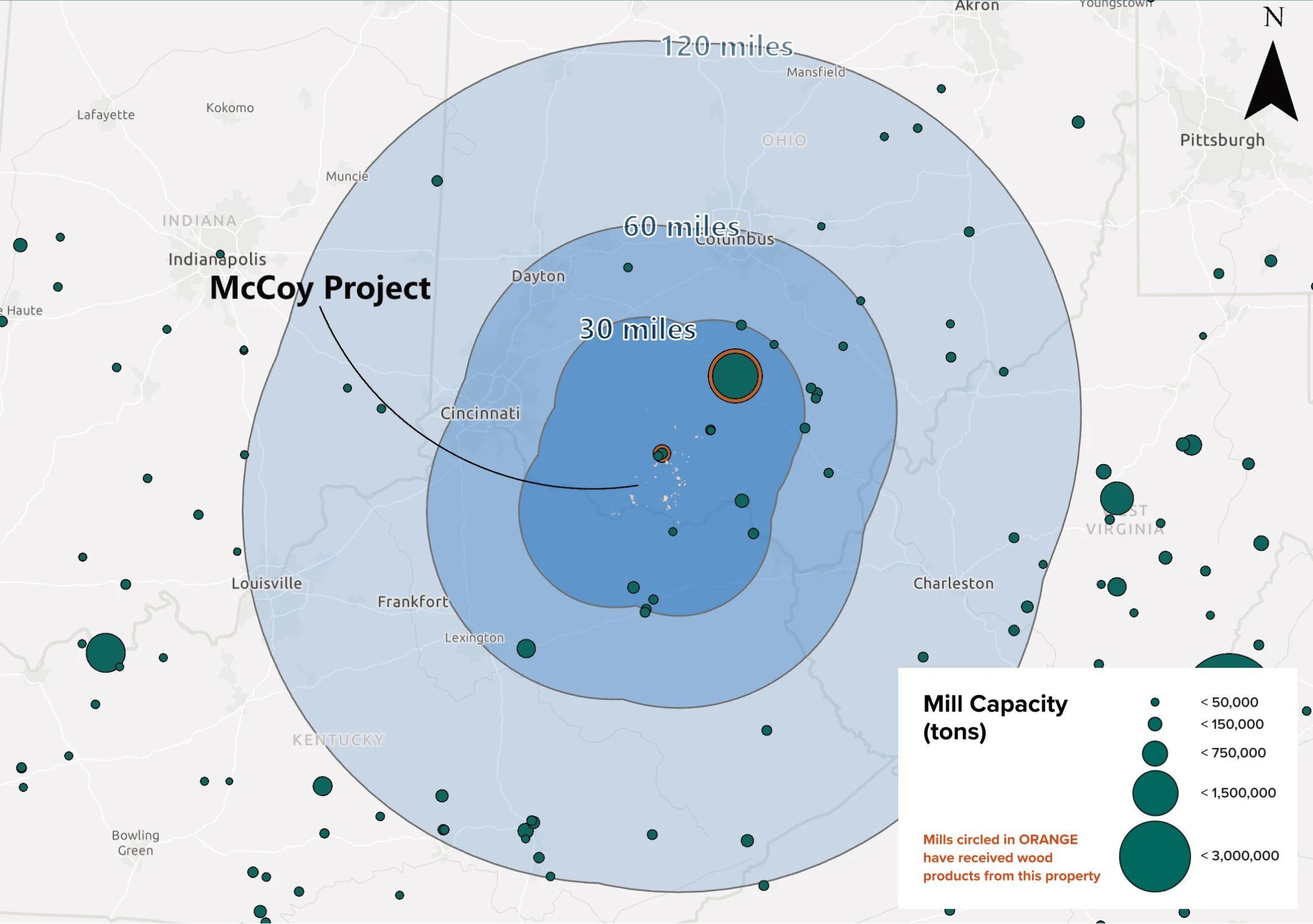
A strong understanding of local forest products infrastructure is key to building a realistic and conservative baseline scenario. To carry out harvests modeled in the baseline, a forest property must be within a feasible travel distance to active processing facilities. This map presents mills that are drivable from the project area along with their relative processing capacity, delineating a framework for a current or future landowner to move timber in the absence of the carbon project, thereby providing a critical piece of direct evidence to the credibility and additionality of the carbon credits resulting from the project’s activities.
Area Regional Mill Capacity
The calculated mill capacity is 6.80 million green tons within 120 miles of the project boundary, and the baseline harvest is 60,803 green tons per year in the first ten years of the project. This equates to 0.89% of the 120-mile mill capacity that is represented by the McCoy baseline.
Ecological Highlight
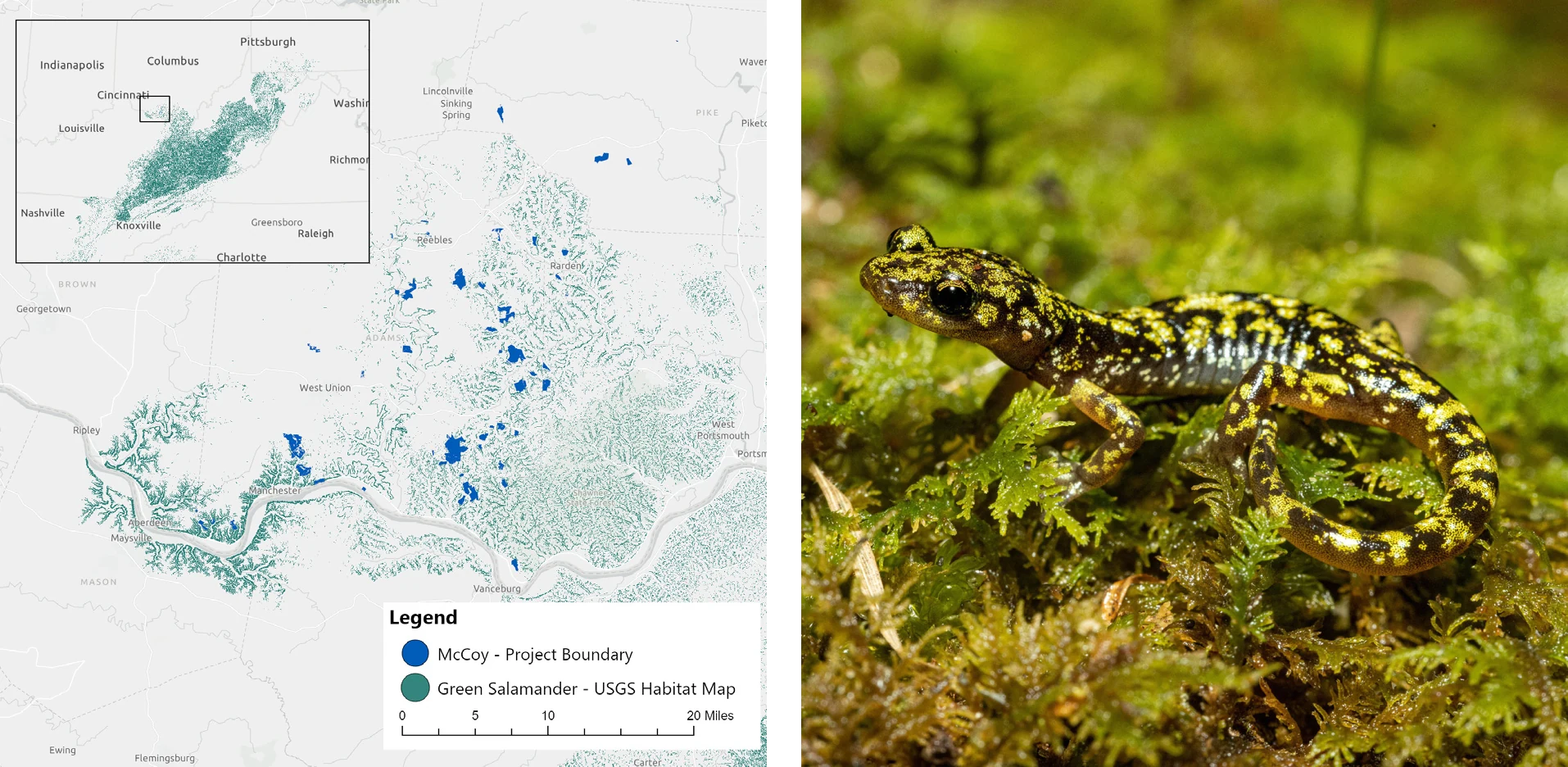
The McCoy project lies at the northwestern-most edge of the range of the green salamander (Aneides aeneus), an Ohio state-listed endangered species. The green salamander is a habitat specialist, typically preferring rock outcrops for nearly all its life cycle activities, but also sometimes nestling beneath the bark of nearby trees. In Ohio, the only suitable habitat for the green salamander occurs near the Ohio River, where forested areas regularly abut inland rock cliffs, creating ideal habitat for the species. The McCoy project area includes a significant amount of this habitat type, and thus presents an opportunity for conservation of this unique salamander. By focusing more on forest health than production of short-term financial return, the McCoy project protects species like the green salamander by reducing harvests and allowing for buffers around sensitive areas like the rock outcrops favored by the salamander. This helps to maintain the delicately balanced temperature and moisture conditions of this ecosystem, and ensure that this rare species maintains its presence in southern Ohio.
Project Impacts
Sustainable Development Goals in action
A universal blueprint for a better world—Anew is helping deliver on the United Nations global vision for social, economic, and environmental sustainability.

Clean Water and Sanitation
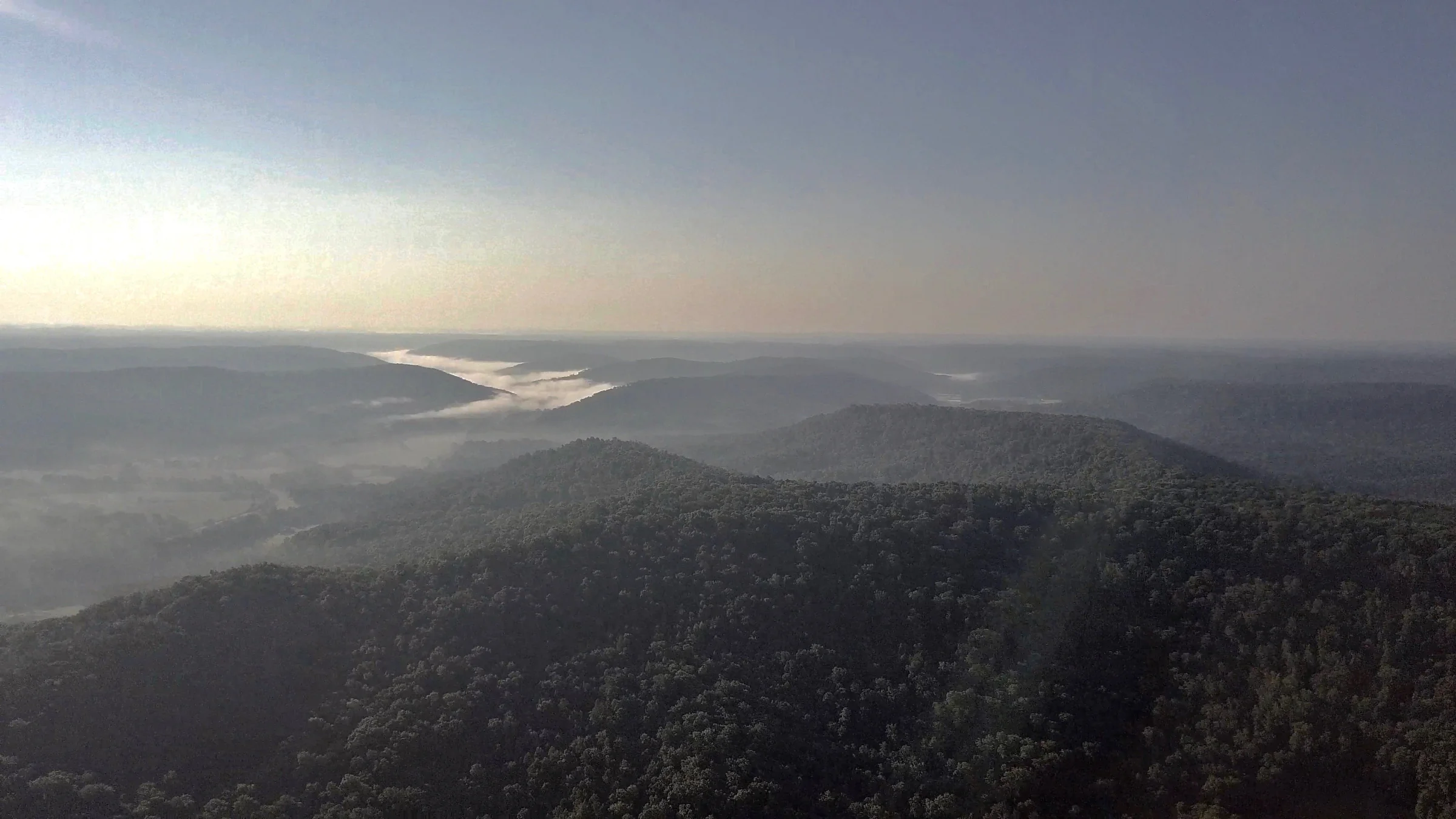
When harvesting, the McCoys focus on the resulting forest stand conditions as much as which trees they harvest given their focus on regenerative growth and forest health. This approach to management helps maintain high-quality, intact, and structurally diverse forests, providing benefits such as reduced sedimentation, decreased water temperatures, and improved habitat for aquatic species. It is also critical for maintaining clean downstream drinking water supplies and healthy watersheds overall.

Sustainable Cities and Communities
This property includes an event center for local organizations and events, cabins and lodges for hunters and tourists, and hiking trails and sporting clays for recreation. Maintenance of cottages, cabins, and walking areas will be funded through carbon project revenues. The project promotes access to outdoor spaces and increased opportunities for regional recreation-based tourism.
Climate Action
The McCoy’s primary goal in managing the timberland is supporting a sustainable forest and its renewable resources while maintaining optimal forest health. Revenues generated from the carbon project will assist in implementing these forest management objectives now and into the future. The project commits to maintaining existing forest carbon stocks and providing long term carbon sequestration, thereby strengthening the resilience and adaptive capacity of the forest to climate change.
Life on Land
The McCoys prioritize natural regeneration and forest health. As a direct result of this carbon project, the property is now certified by the Sustainable Forestry Initiative (SFI), which will ensure any harvesting does not negatively impact the existing forest resources and ecological characteristics of the property. Sections of the property are part of the larger “Sunshine Corridor” project, which links properties together to create the largest contiguous, protected forestlands in Ohio. Extensive forest cover provides corridors for wildlife movement and plant migration ensuring the continuity of diverse species in the Appalachian Mountain ecosystem.

How does IFM generate both removals and conservation credits?
Conservation Credits
Conservation credits account for climate benefit coming from the protection of the project area. Emissions that would have been released if the land was instead harvested in the absence of the project are quantified. Many of the co-benefits associated with forestry projects are inherently linked to the preservation of existing forest stands.
Removal Credits
As the newly protected trees grow, carbon is pulled from the atmosphere and sequestered in the trees’ wood material through the most proven direct air capture technology on the planet, photosynthesis.