Eagle Mountain Forestry Project
Permanently protecting former timberland across four northeastern states as Forever Wild wilderness.
The Eagle Mountain Forestry Project is an Improved Forest Management (IFM) initiative on four separate tracts of land totaling 6,142 acres in the northeast Adirondacks of New York, Hillsborough County NH, Windsor County VT, and Franklin County ME, all acquired by the Northeast Wilderness Trust (NEWT). Prior to NEWT’s acquisition, these forestlands were either at risk of being logged or marked with a history of harvest.
Upon acquiring the properties, NEWT enrolled all four into the carbon project and began permanently protecting them as Forever Wild, restricting all future harvesting. Carbon revenues facilitated the purchase of the land, and ongoing income from credit sales will support further land and conservation easement purchases. The project is registered with the American Carbon Registry and is anticipated to create more than 354,000 mtCO2 of emissions reductions over its first 20 years.
Beyond carbon impact, the project protects streams critical to native brook trout and Atlantic salmon in a watershed that over 150,000 people rely on for drinking water, and secures the nesting territory of one of only approximately 50 breeding pairs of peregrine falcons in New York State.

Additionality
The Eagle Mountain carbon project is on four separate tracts of land, all acquired by the Northeast Wilderness Trust (NEWT). The original Eagle Mountain project encompassed 2,276 acres located in the northeast Adirondacks, and the property was purchased by NEWT to become the Eagle Mountain Wilderness Preserve using carbon revenues from a separate project. NEWT then secured financing based on projected carbon revenues to purchase three more parcels to incorporate into the Eagle Mountain Project. With these new properties located in Hillsborough County NH, Windsor County VT, and Franklin County ME, the Eagle Mountain carbon project is currently 6,142 acres.
The Northeast Wilderness Trust has a ‘rewilding’ focus whereby they purchase land across New England and northern New York and convert it into permanently protected wilderness preserves and habitat sanctuaries. Their goal is to provide the time and space for existing forests to flourish freely and reach their full ecological potential. The Northeast Wilderness Trust “envisions — and is working to establish a landscape of connected and resilient wildlands throughout the Northeast USA. Wildlands conservation is a proven and cost-effective means to slow biodiversity loss and improve carbon stocking and climate resilience, and yet less than 4% of our landscape is protected as wild.” - Jon Leibowitz, CEO NEWT.
Prior to NEWT’s acquisition, these forestlands were either at risk of being logged if NEWT had not purchased and conserved and/or were marked with a history of harvest. Upon acquiring these properties, NEWT enrolled all four properties into the carbon project and began the process of permanently protecting the properties as Forever Wild, restricting all future harvesting and marking a significant change for this land. Carbon revenues facilitated the purchase of the land and execution of NEWT’s intended conservation efforts, and financial underwriting. NEWT’s ownership of the property now ensures long-term conservation of the forests instead of their likely fate without carbon revenue. If carbon funding remains robust, NEWT will continue to dedicate ongoing income from credit sales to the purchase of additional landholdings and conservation easements, furthering NEWT’s ‘rewilding’ efforts.
We have used carbon revenue to help fund our mission to create new wilderness in the Northeast through a combination of carbon credit pre-sales and ongoing revenue expectations. NEWT relies on philanthropic funding to support much of its mission, but philanthropic dollars often fall short when conservation opportunities arise. Private capital is necessary to meet climate change mitigation needs such as protection of vital carbon sinks. Carbon revenue, often in the form of advance payments, made the acquisition of many of our recent Preserves possible while providing an ongoing revenue stream to support their long-term stewardship.
— Jon Leibowitz, CEO, NEWT
Baseline Description
The baseline scenario represents the harvest management plan that would likely have happened on the project area if it were not enrolled in a forest carbon project and a legally binding Forever Wild Conservation Easement. The baseline is subject to operational considerations in the region to ensure suitable modeling. The project scenario consists of managing the forest for natural forest growth with no current or future commercial harvesting, although potential future harvests involving invasive or non-native species removal or trail safety maintenance may occur. There were no encumbrances on the property at the time of enrollment, and the Eagle Mountain carbon project area is in the heart of New England’s forest products sector—home to several sawmills and paper mills within a reasonable drive in NY, VT, NH, northern MA, and ME. Wood products, including sawtimber and pulpwood are distributed to mills throughout this region. The property adjoins multiple industrial timberland owners, and private forestland is heavily cut and managed throughout the region. Clearcutting, shelterwood harvests, and single tree selection are all commonly utilized.
When we purchase and conserve these properties, we remove them from the timber base and place them in a Forever Wild conservation easement, typically held by a partner land conservation organization. This change in ownership signifies the management change—from timber management to ecological management, and this is how our additionality, and therefore carbon credit yield, is derived. We limit carbon enrollment to properties that were being commercially managed or were threatened by logging or development prior to our acquisition and only develop carbon projects on newly conserved properties.
— Jon Leibowitz, CEO, NEWT
Regional Harvest Activities
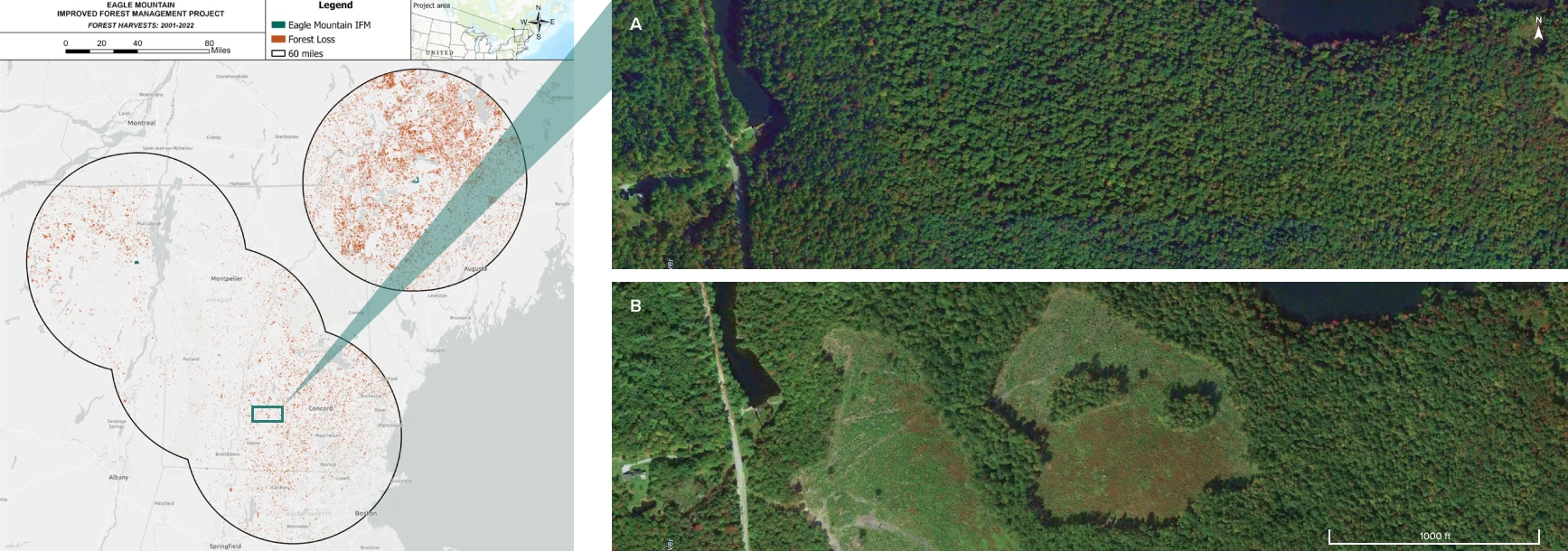
A conservative baseline scenario considers not only what a landowner could do, but what a landowner plausibly would do in the absence of the harvest limitations associated with a carbon project. In the following map, Anew demonstrates actual recent harvests in the project area’s region. This data speaks to the strength of local timber markets and common management practices on forested properties of comparable size and ownership type—an integral piece in informing the accuracy and viability of assumptions in the baseline scenario.
Harvest Comparison
All harvests/forest losses larger than 5 acres that happened between 2001 and 2022 within a 60 mile radius from the project area are depicted in orange, showing the very real pressures on forests in the area. The carbon project ensures sustainable management on the project area for 40 years, twice as long as the period depicted above.
Hansen, M. C et al. “High-Resolution Global Maps of 21st-Century Forest Cover Change.” Science 342 (15 November 2013 & updates): 850–53. https://glad.earthengine.app/view/global-forest-change
Regional Mill Map
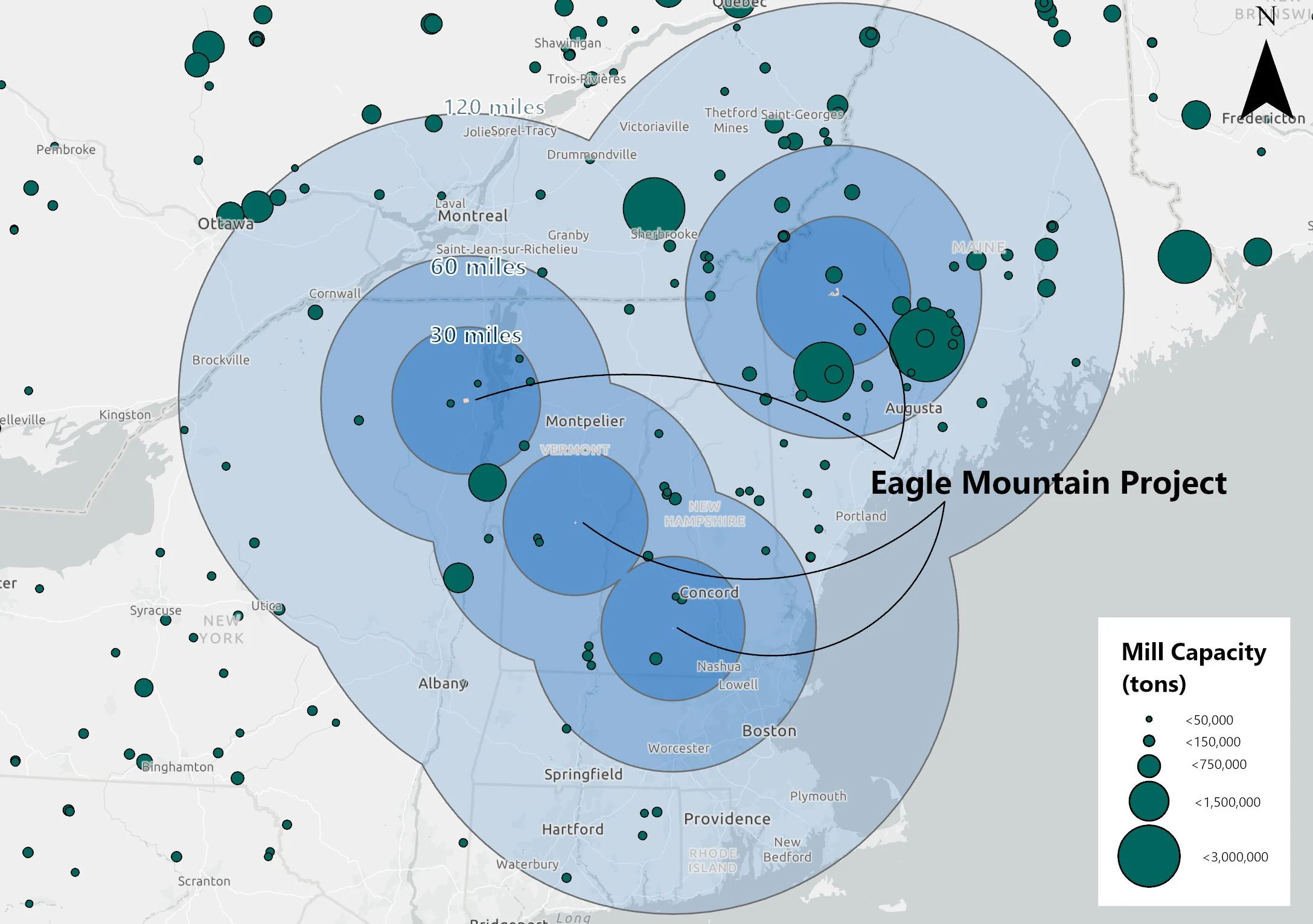
A strong understanding of local forest products infrastructure is key to building a realistic and conservative baseline scenario. To carry out harvests modeled in the baseline, a forest property must be within a feasible travel distance to active processing facilities. This map presents mills that are drivable from the project area along with their relative processing capacity, delineating a framework for a current or future landowner to move timber in the absence of the carbon project, thereby providing a critical piece of direct evidence to the credibility and additionality of the carbon credits resulting from the project’s activities.
Area Regional Mill Capacity
The calculated mill capacity is 22.29 million green tons within 120 miles of the project boundary, and the baseline harvest is 35,644 green tons per year in the first ten years of the project. This equates to 0.16% of the 120-mile mill capacity that is represented by the Eagle Mountain baseline. While harvesting was not pursued in the project scenario, if harvesting been pursued in the absence of the carbon project, there is ample mill capacity in the region.
Ecological Highlight
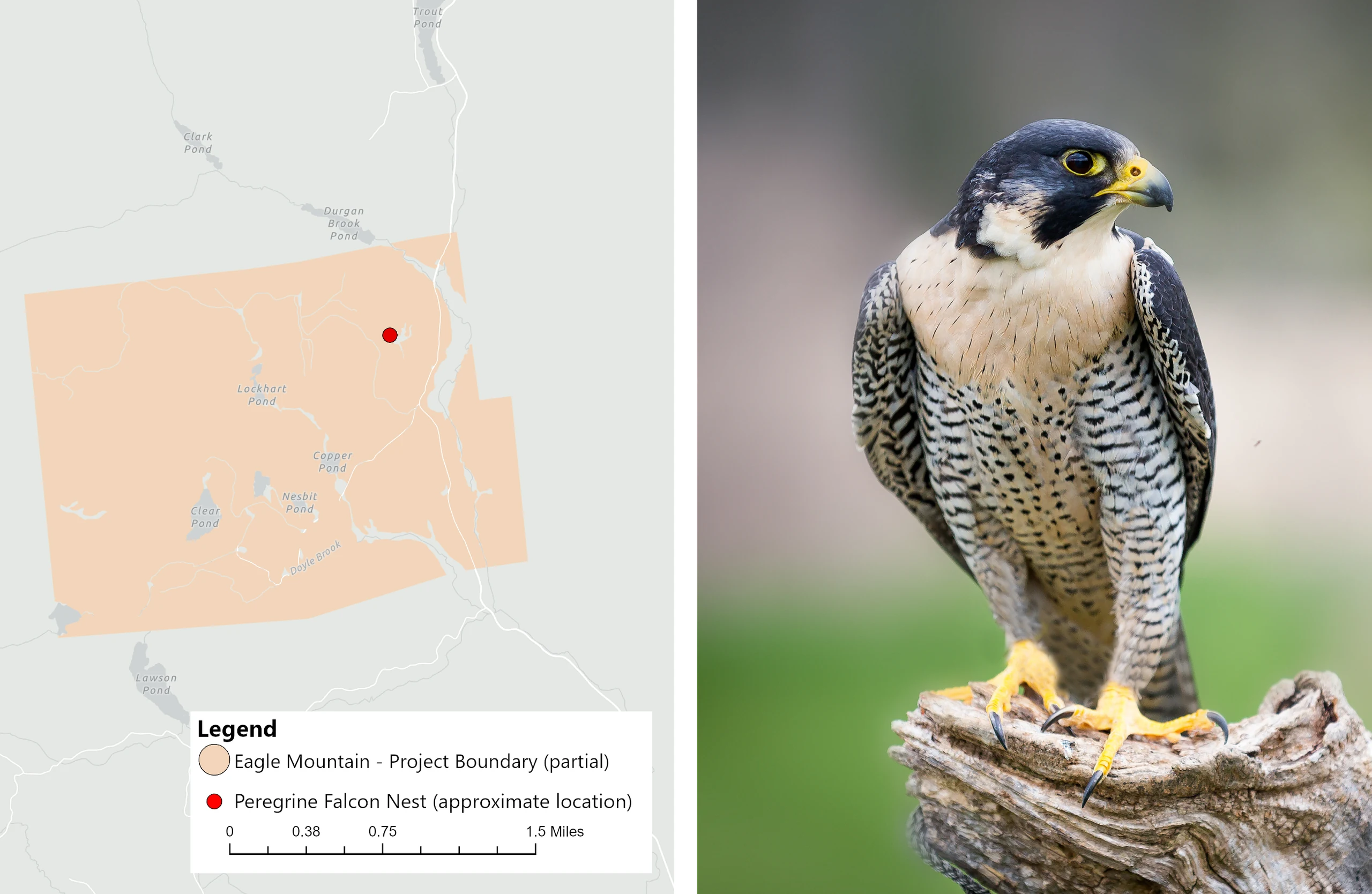
The Eagle Mountain project crosses into four states across the northeast United States and supports several important ecological resources across its 6,000+ acres. Of particular interest is the New York portion of the Eagle Mountain property. Here, a mix of primarily low elevation forest along with five individual peaks rising above 1,000 feet in elevation provide varied and crucial habitat, including for the peregrine falcon. The peregrine falcon (Falco peregrinus), once endangered throughout the United States due to a population decline from DDT exposure, was also extirpated from New York State in 1965. Since DDT use was banned across the US in 1972, the peregrine falcon has recovered but remains an endangered species in New York State. Currently, the state is home to only approximately 50 breeding pairs of peregrine falcons, who mate for life and use the same nesting territory annually. One of those pairs of falcons has used the eponymous Eagle Mountain on the New York portion of the Eagle Mountain project as a nesting location since 2015 (as shown on the nearby map). The Eagle Mountain project provides security to this peregrine falcon pair, allowing it to persist unaffected by anthropocentric activities – something that was not a given during the property’s previous history of intensive harvesting.
Project Impacts
Sustainable Development Goals in action
A universal blueprint for a better world—Anew is helping deliver on the United Nations global vision for social, economic, and environmental sustainability.

Clean Water and Sanitation
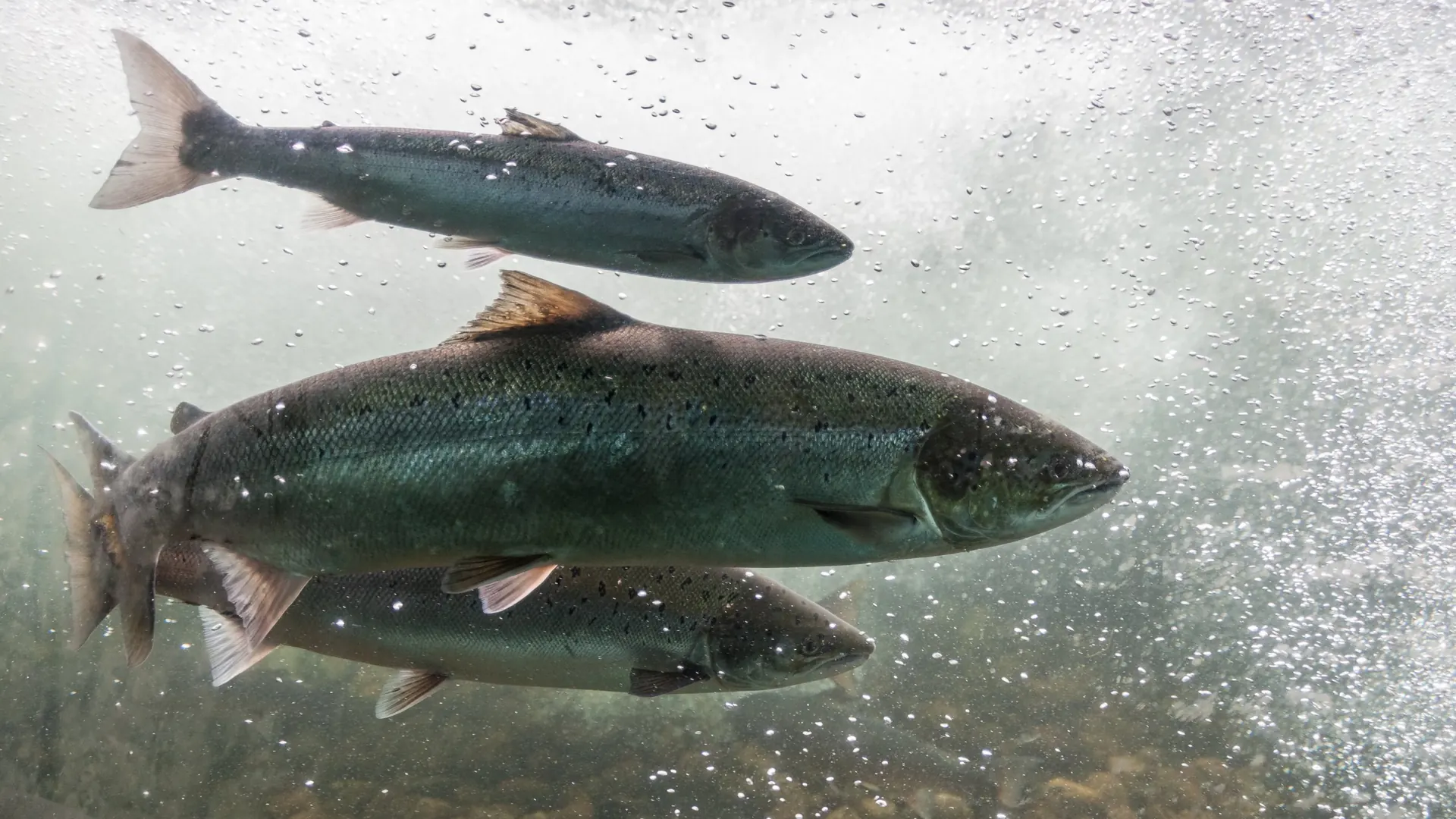
This carbon project protects streams critical to native Brook Trout and Atlantic salmon—a significant co-benefit as Maine is home to more than half of the nation’s brook trout and is the only place in the United States where natural populations of Atlantic salmon live. The exceptional water quality of the stream systems on the property is demonstrated by the presence of the Eastern Pearlshell, a rare freshwater mussel found in only a few locations in New York State and an at-risk species throughout its range due to water pollution and dams. In addition to the fish and wildlife that depend on clean water from the property, there are over 150,000 people that rely on this watershed for drinking water. NEWT only allows low-impact recreation, such as hiking, nature observation, snowshoeing, and cross-country skiing, and prevents all industrial and commercial uses that disturb flora, fauna, soils, and aquatic resources. Protecting headwater brooks and streams from disturbance ensures high quality aquatic ecosystems and long-term, healthy water supplies.

Climate Action
NEWT’s goal in committing to sustainable forest management practices is to protect and enhance existing carbon stocks, prevent intensive forest management, and create a landscape of connected and resilient wildlands. A Forever Wild Conservation easement was recorded on each property involved in the Eagle Mountain Carbon Project within one year of the carbon project start date ensuring the land will never be harvested, converted to cropland, or urbanized. These wilderness preserves, supported by carbon revenue, serve as regional and global carbon sinks, provide a suite of ecosystem services that benefit local communities and beyond, and provide critical ecosystem services including clean air and water, flood resilience, and habitat connectivity.

Life on Land
NEWT uses carbon revenues to help fund its mission of creating new wilderness in the Northeast, with the aim of slowing biodiversity loss, enhancing carbon stocking, and improving climate resilience across the landscape. The project area is home to pristine ponds, extensive wetlands, and dramatic viewsheds, offering habitat to a diversity of species and densely forested, northern hardwood and conifer forests with unique water features such as vernal pools and wetlands. Part of the property is also mapped as critical Canada lynx habitat, and with the property’s keystone location between multiple ecological preserves, it is a necessary link for wide-ranging animals like lynx, moose, bobcats, and bears.

How does IFM generate both removals and conservation credits?
Conservation Credits
Conservation credits account for climate benefit coming from the protection of the project area. Emissions that would have been released if the land was instead harvested in the absence of the project are quantified. Many of the co-benefits associated with forestry projects are inherently linked to the preservation of existing forest stands.
Removal Credits
As the newly protected trees grow, carbon is pulled from the atmosphere and sequestered in the trees’ wood material through the most proven direct air capture technology on the planet, photosynthesis.