North Maine Woods Forestry Project
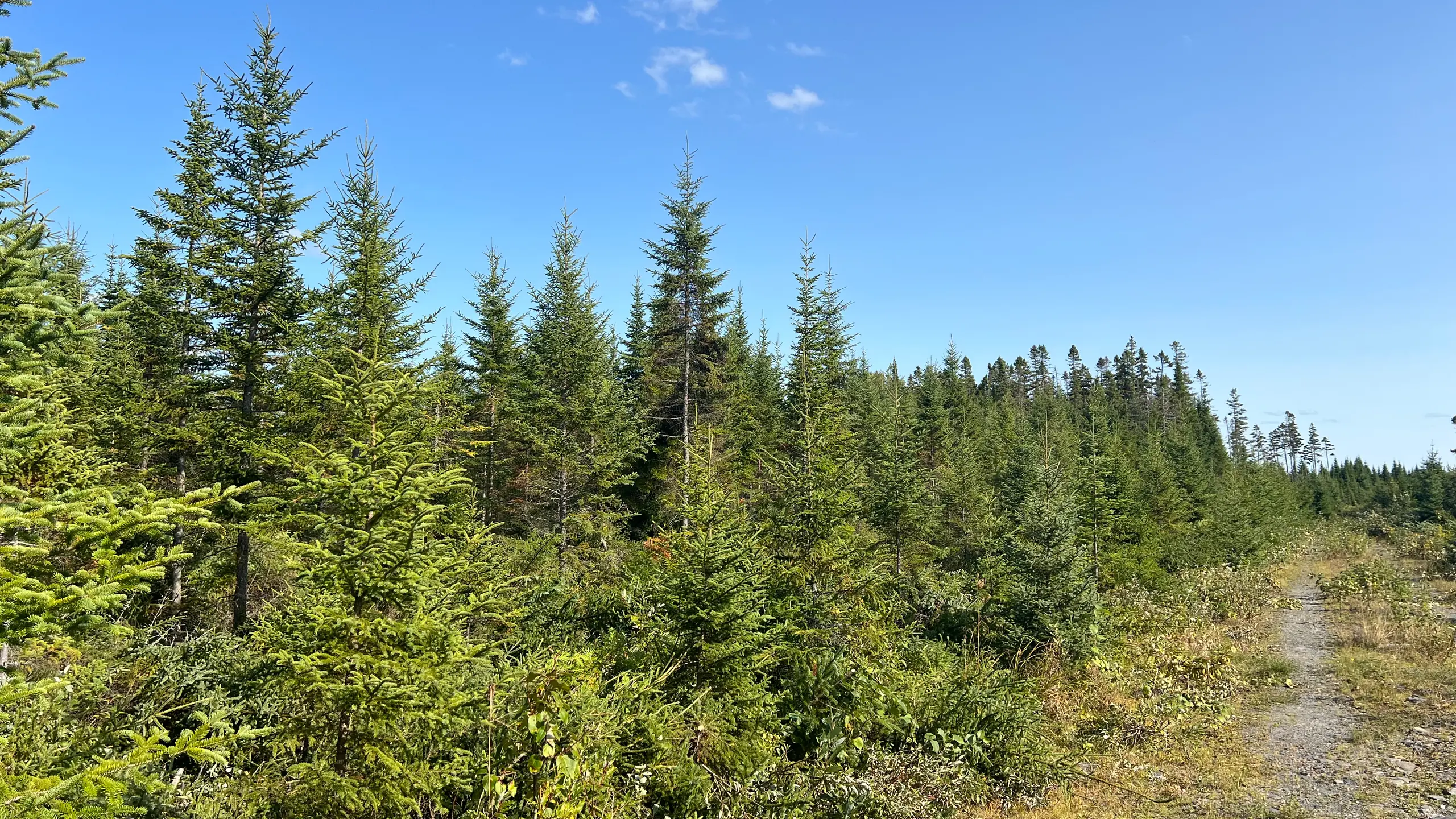
Extending harvest rotations across 86,221 acres of northern hardwood and conifer forest in northwestern Somerset County, Maine.
The North Maine Woods Improved Forest Management (IFM) Project occupies 86,221 acres of northern hardwood and northern conifer forest located in NW Somerset County, Maine. The land is owned by Tree-Star Timberlands, Ltd., a wholly owned subsidiary of Groupe Gesco Star Ltée (Gesco), a privately held, for-profit, Canadian company dedicated to the production/supply, processing, brokerage, and road transport of wood material. Gesco has substantial forest holdings in Canada and the US on which it practices industrial timber management to supply its own saw and planing mills as well as other North American wood processing facilities. Within a year of its 2020 purchase of the North Maine Woods property, Gesco enrolled the acres in the carbon program in hopes that carbon pricing could outcompete pulp markets, thereby allowing their forest managers to extend rotation ages across the property, prioritizing carbon and long-lived wood products over faster-rotation pulpwood management. In association with the requirements of the ACR carbon program, the North Maine Woods property underwent Sustainable Forestry Initiative (SFI) certification, further ensuring sustainable harvesting practices on the project area.

Additionality
While the North Maine Woods property is well stocked and has a comprehensive 10-year forest management plan with substantial harvest targets, little commercial harvesting has taken place on the forest since the commencement of the carbon project, as Gesco has been waiting to see if its carbon-centric strategy is going to meet financial goals. If carbon credits generated on the property do not provide the necessary revenues, timbering will need to increase to meet the forest management plan’s initial harvest targets and fill the financial gap. Reports from the Maine Department of Agriculture, Conservation, and Forestry show that wood product demand throughout the region has been consistently strong for both hardwood and softwood species for many years,1 and regional mill infrastructure could readily absorb increased woodflows from the North Maine Woods property if the landowners elected to forgo carbon credit generation and pursue greater harvesting for timber products.
1. Maine Department of Agriculture, Conservation and Forestry Maine Forest Service 2020 Wood Processor Report; file:///C:/Users/IanHash/Downloads/2020_WoodprocessorReport_final.pdf
Baseline Description
The baseline scenario models reductions in carbon stocking across the property under a management regime consistent with Gesco’s financial goals in the absence of carbon revenue. Under the baseline scenario, currently merchantable timber is harvested in the manner typical of industrial timber managers in the vicinity of the project, with stands being cut as they reach viable diameter thresholds. Management similar to that modeled in the baseline scenario has proven consistently lucrative for landowners across the region and is likely to persist amongst for-profit managers, like Gesco, if carbon revenues do not present a viable alternative.
Regional Harvest Activities
All harvests/forest losses larger than 5 acres that happened between 2001 and 2021 within a 60 mile radius from the project area are depicted in orange1, showing the very real pressures on forests in the area. The carbon project ensures sustainable management on the project area for 40 years, twice as long as the period depicted below.
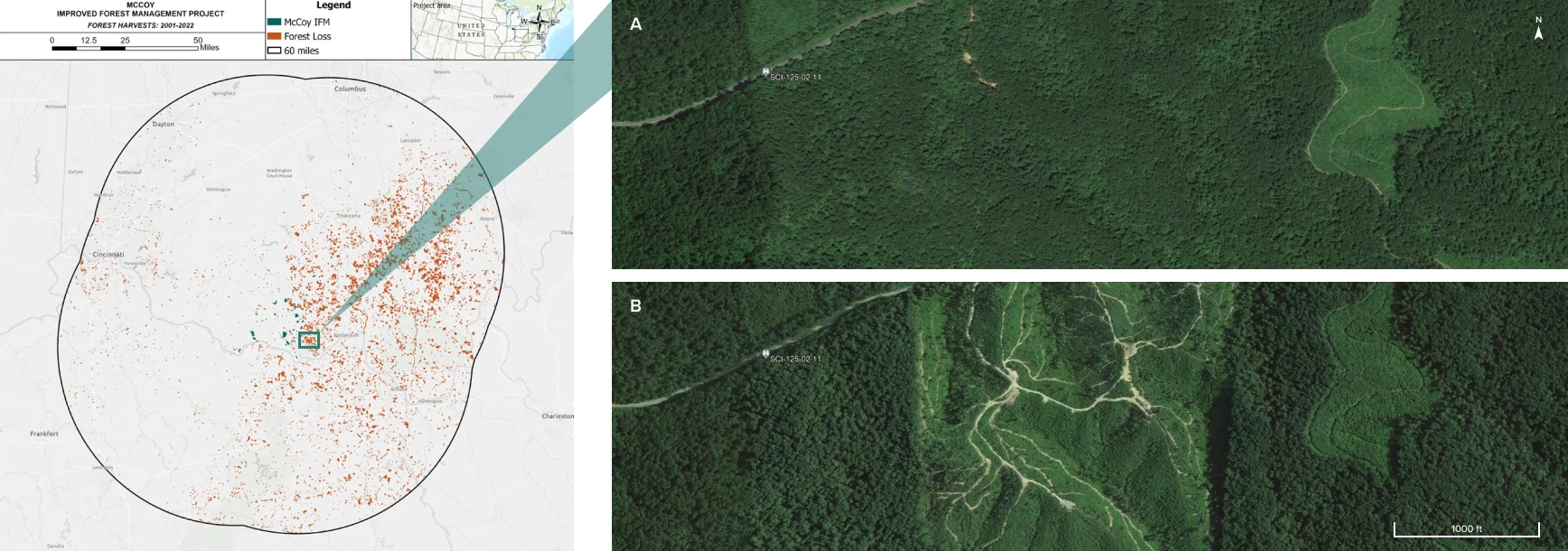
1. Hansen, M. C., P. V. Potapov, R. Moore, M. Hancher, S. A. Turubanova, A. Tyukavina, D. Thau, S. V. Stehman, S. J. Goetz, T. R. Loveland, A. Kommareddy, A. Egorov, L. Chini, C. O. Justice, and J. R. G. Townshend. “High-Resolution Global Maps of 21st-Century Forest Cover Change.” Science 342 (15 November 2013 & updates): 850–53. Data available on-line from: https://glad.earthengine.app/view/global-forest-change.
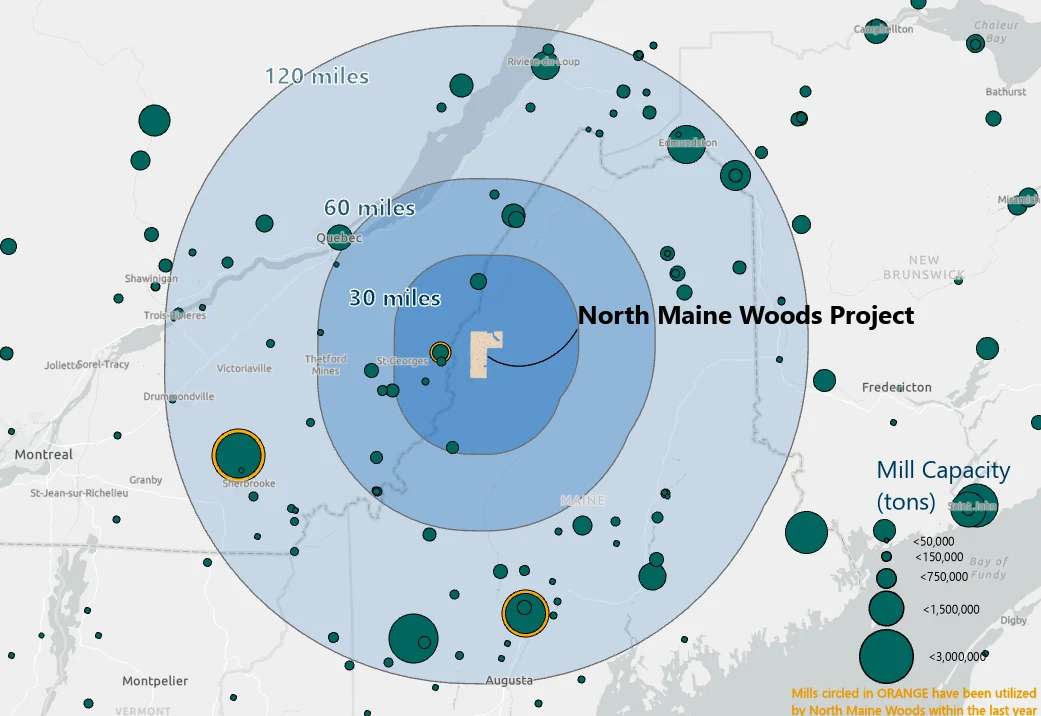
Regional Mill Capacity
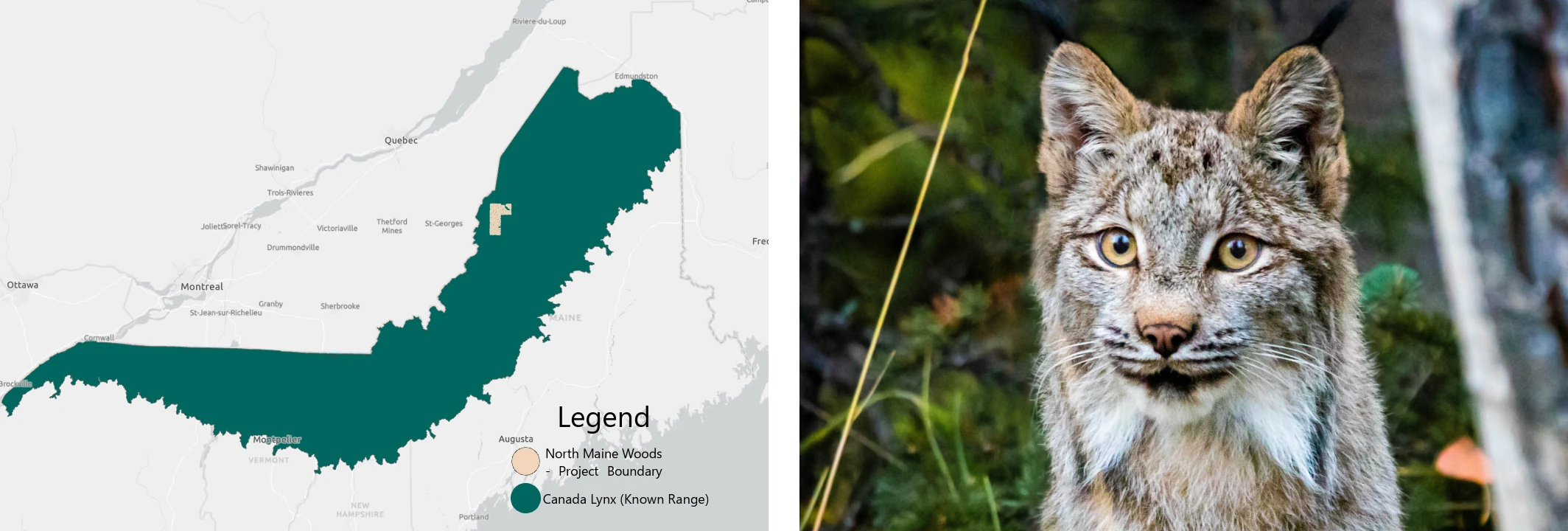
Ecological Feature: Canada Lynx
The North Maine Woods forest carbon project falls within the habitat range of the Canada lynx, a federally threatened species. The forest management activities under the carbon program will support the mature spruce-fir ecosystems the lynx depends on, and promote the growth of lynx populations.
Project Impacts
Sustainable Development Goals in action
A universal blueprint for a better world—Anew is helping deliver on the United Nations global vision for social, economic, and environmental sustainability.

Clean Water and Sanitation
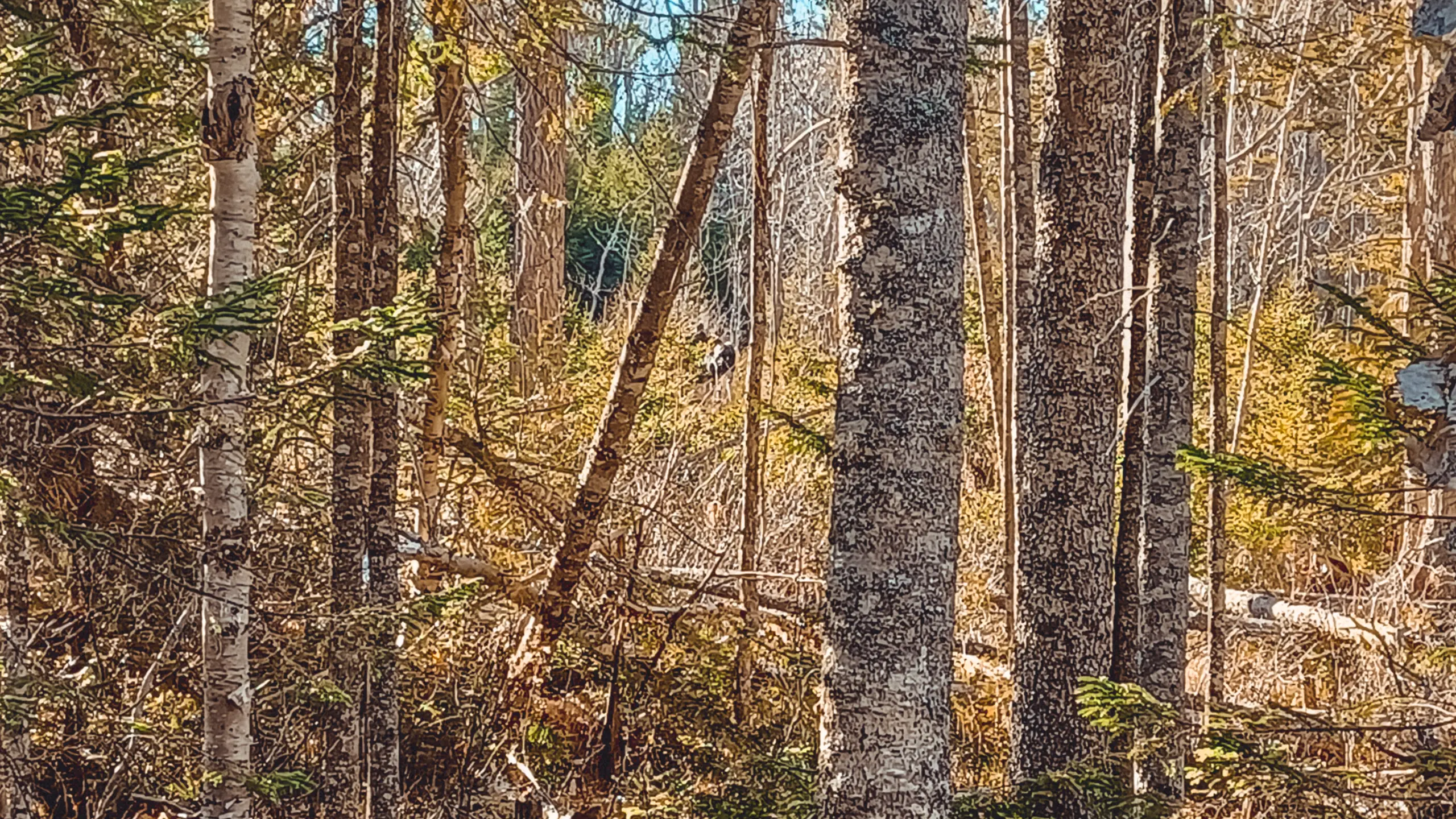
Property tributaries filter rainwater into Baker Lake, which flows into the St. John River—one of the most remote rivers in the northeastern U.S. The project is working to remove impediments to the upstream movement of fish, helping native species thrive.

Decent Work and Economic Growth
Project infrastructure: bridges, roads, culverts, and tree plantings, as well as two sugar houses, one with over 25,000 taps, support the economy for nearby U.S. and Canadian towns.
Climate Action
This project will help trees grow into maturity and sequester a greater amount of atmospheric carbon dioxide through their natural life cycles. Over its first 20 years, the project is anticipated to create over 3 million tCO₂e of emissions reductions.
Life on Land
The forest is part of a system of habitats providing safe corridors for lynx, moose, black bear, and more.

How does IFM generate both removals and conservation credits?
Conservation Credits
Conservation credits account for climate benefit coming from the protection of the project area. Emissions that would have been released if the land was instead harvested in the absence of the project are quantified. Many of the co-benefits associated with forestry projects are inherently linked to the preservation of existing forest stands.
Removal Credits
As the newly protected trees grow, carbon is pulled from the atmosphere and sequestered in the trees’ wood material through the most proven direct air capture technology on the planet, photosynthesis.